
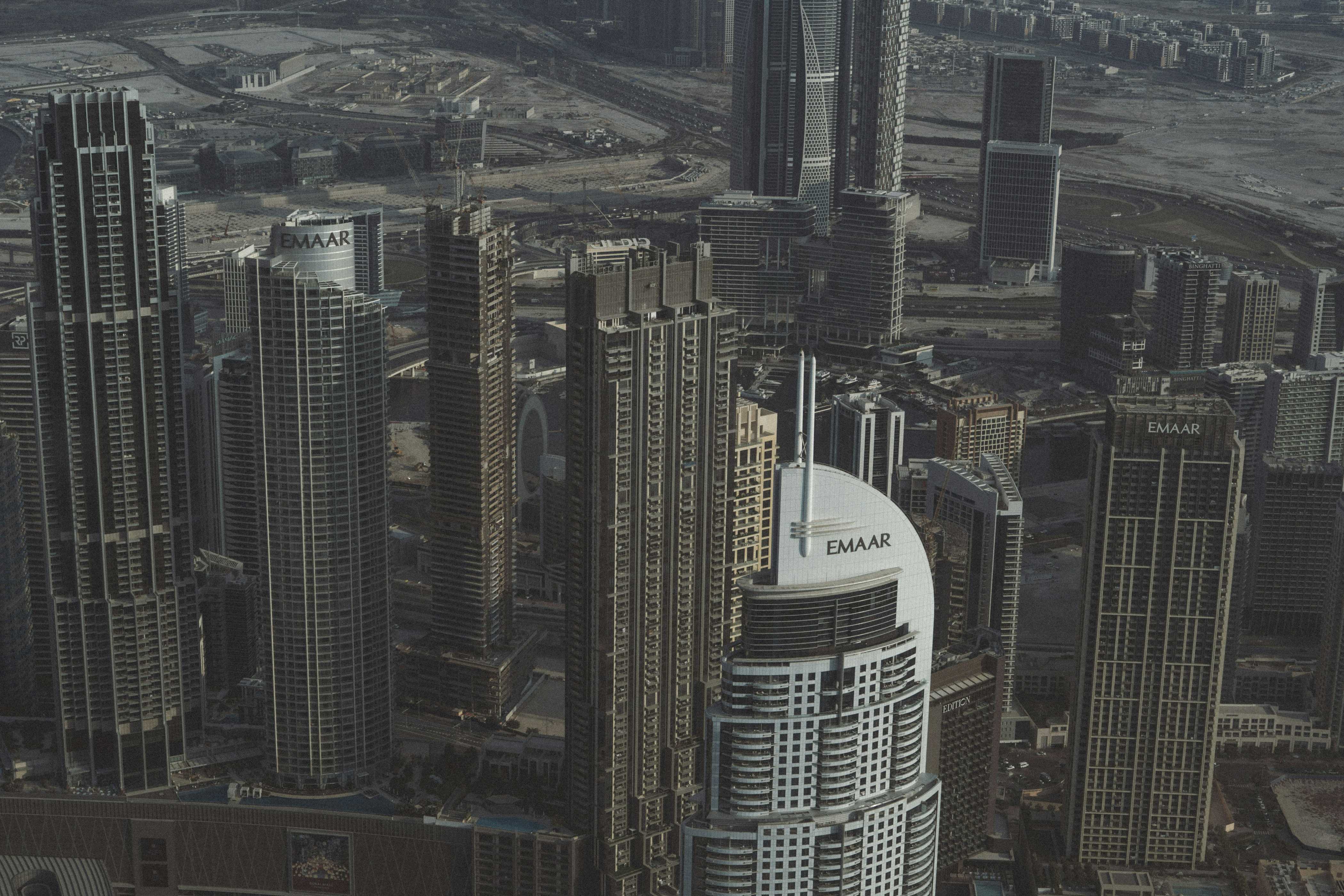
Dubai Real Estate Supply and Demand: What’s Really Driving the Market in 2026?
When you have been following the headlines of late, you must have come across such expressions as record property launches, surging demand, and concerns of a shortage of housing in Dubai.
- What then is really going on behind the scenes?
- Is Dubai building too much?
- Or is the demand still exceeding the supply?
The solution to this in 2026 is not dramatic, but strategic. And when you get to know the supply- and demand equation in the Dubai real estate industry, the fluctuations in prices, the rise in renting cost, and investor trust begin to make perfect sense.
Let us put it down in actual practice.
The Long View: It Is a Structural and not a Temporary Demand
The real estate demand in Dubai is not only a speculative flipping at the present. It is fuelled by long term fundamentals:
- Increase of population to over 3.6 million inhabitants.
- Relocation of startup and expansion of business.
- Long term residency and Golden Visa reforms.
- International investors that desire tax efficient markets.
- Premium customers who are moving out of Europe, Asia, and CIS countries.
In contrast to past cycles that were driven by high levels of short-term speculation, the 2026 demand will be backed by real people relocating to the city - families, entrepreneurs, remote workers and corporate executives.
And that changes everything.
Residential Supply: Record Launches, Controlled Delivery
Yes, Dubai is introducing a great number of new projects. Developers are in operation in:
- Dubai South
- Meydan
- Jumeirah Village Circle
- Business Bay
However, here is the part where most headlines fail to show:
The introduction of a launch is not an instant supply.
A large number of off-plan projects require 2-4 years to develop. It implies that the amount announced to supply today does not automatically go into the market. At the same time, the population is increasing every month.
This introduces a distortion in the short run - particularly the ready-to-move-in units.
Ready Property vs Off-Plan: The Supply Gap behind the Curtain
The current difference between the supply and demand of real estate is one of the largest trends in the Dubai real estate environment today.
- Ready properties
- Off-plan (under construction) apartments
Ready homes are not available in high demand areas such as:
- Downtown Dubai
- Dubai Marina
- Palm Jumeirah
New supply is limited due to the fact that these communities are mostly constructed. This is why the prices and rent remain high there. On the contrary, new locations are experiencing increased off-plan stocking - providing purchasers with a greater choice and payment choices.
Trend Insight: There is short-term pressure in ready units. The supply prospects are healthier in the long term because of the future deliveries.
Population Growth: The Demand Engine
Dubai is not only receiving investors. It's attracting residents.
The city is also expanding due to:
- Zero income tax
- Strong infrastructure
- Safe living environment
- Expanding job market
- Strategic global location
Each new resident requires a place to stay be it either rented or owned.
And here's the key point:
As long as at least 40,000-50,000 units are provided annually, in case of high population growth that consumes them, the demand will remain strong. That is what we are even now seeing.
Investor Demand vs End-User Demand
The current demand of Dubai is divided into two groups of the main buyers:
- End-Users
They are households who are buying houses to reside. This segment has increased tremendously because of:
- Attractive mortgage rates
- Long-term visa benefits
- Increasing rentals (moving tenants to purchase)
- Investors
Dubai is also active in both local and international investments due to the fact that it provides:
- In most communities, rental yields are 6-8% high.
- No annual property tax
- No capital gains tax
- Currency stability
The city of Dubai still appears cheap on an average of the price per square foot as compared to major cities in the world such as London or Hong Kong.
That makes foreign capital continue to pour in - and more so into off-plan projects.
Are We on the Road to Oversupply?
It is the most sought after one in 2026.
In the past, the corrections in Dubai were supply-driven. However, the current state of affairs is not the same due to a number of reasons:
- Phased launches are being used by the developers, instead of mass delivery.
- The payment plans extend past the time of completion and enhance buyer retention.
- A vast number of sales are in cash.
- The regulatory control is more powerful than the past cycles.
Moreover, most of the off-plan units are not sold to short term flippers but to long term investors.
Therefore, it is the case that even when the numbers of supply are large on paper the absorption rates are also good.
Commercial Real Estate: A beige market
Most of the headlines are given to residential, but commercial supply and demand are also critical.
Offices in prime areas such as:
- DIFC
- Business Bay
is experiencing low Grade A stock.
As multinational companies are building up regional headquarters in Dubai, the office vacancy rates in prime regions are getting tight. That is an indicator of economic growth - which is an indirect catalyst of residential demand.
Pressure of Rental Market: Reflection of Supply
Increase in rental by 2024-2026 indicates imbalance in supply demand in ready homes.
Why rents rose:
- Limited vacant inventory
- Influx of new residents
- Change of landlords into short-term in tourist areas
- Strong job creation
Nevertheless, the growth in rentals can be leveled off as more new units are finished within the last 24 months, particularly, in the middle-market communities.
Infrastructure Development: Future Supply
Dubai's growth isn't random.
The supply expansion is being supported by new infrastructure investments in:
- Dubai South (around the expansion of Al Maktoum Airport)
- Meydan
- Expo legacy zones
- Metro expansion corridors
The planning of infrastructure plays a relevant role in the supply and demand. New housing stock cannot perform without connectivity and amenities. Dubai is normally a combination of development, transport and lifestyle planning.
That minimises the risk of oversupply in the long run.
Luxury Segment: Scarcity of Land, Continued demand
The ultra-luxury market (especially waterfront villas and branded residences) has an alternative supply equation.
Communities like:
- Palm Jumeirah
- Emirates Hills
are characterized by low availability of land.
Wealthy individuals who are moving to Dubai are competing over limited inventory. This has made luxury prices strong even in the face of wider market trends.
What to Expect in 2026-2028
Here's the balanced outlook:
- High demand is caused by migration and economic growth.
- There are large off-plan supply that is going to be handed over.
- Ready inventory would still be tight in prime areas.
- Supply in the middle of the market might allow pressure to be slightly relieved.
- No significant crash signals in the existing fundamentals.
Rather, Dubai seems to be shifting to a more institutionalized and structured market cycle than boom-bust.
What This Means for Buyers
If you're considering buying:
- Off-plan has a flexible and entry pricing.
- Ready property can possess the need of fast decision making because of competition.
- Target community through infrastructure.
- Do not buy stuff that is mere speculation.
It is not easy to spot the market at the right time. It is wiser to know the pipelines of supply and delivery schedules.
The Implication of this to the Investors
To investors, it implies to the supply-demand balance:
- Rental yields are still competitive in the mid zones
- Luxury has been supply-constrained.
- Community diversification mitigates the risk.
- Long term holding could be better than short flipping.
The supply of real estate in Dubai is growing - and so is the number of countries where it is demanded.
Conclusions: A City with a Growing Market
It is not a case of oversupply panic in Dubai real estate supply and demand in 2026. It is concerned with planned growth.
The city is expanding in the economic, demographic, geographic ways. The supply is on the rise and so is absorption.
The market cannot react as it used to during speculative cycles because demand is caused by people moving to new places, businesses growing and the global capital looking to stabilize in the market.
The actual situation is not excessive supply.
It is a question of whether supply correlates with population growth and infrastructures and at this point, it does to a great extent.
Dubai isn’t slowing down.
It’s scaling — carefully.
About Property Gulf
As experts in the Dubai real estate market, Property Gulf has established itself as a leading force since 2007. Our main goal has been to achieve excellence in services and client satisfaction, making us the preferred choice for both buyers and sellers.
Learn more about us →Related Articles

Categories
Looking for your dream property?
Let our expert team help you find the perfect property in Dubai. Contact us today for personalized assistance.
Contact Us