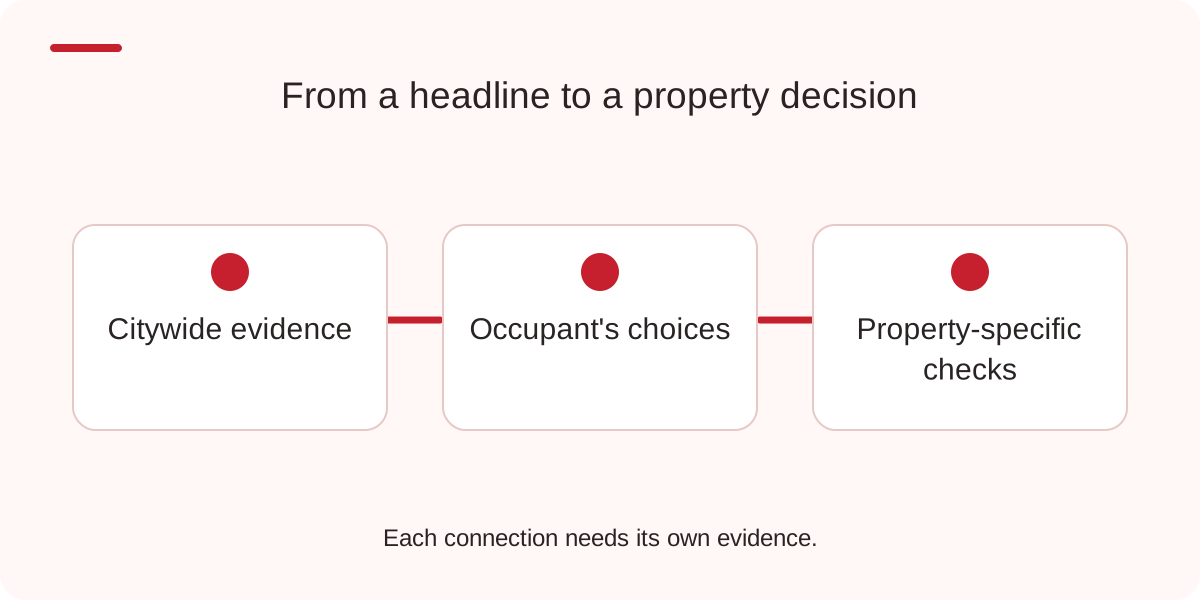
Population and tourism reports can suggest where to investigate. To assess a particular rental property, identify the intended occupant, test the competing choices and ask what evidence would support the proposed rent.
Start with the person who would choose the home
A statement that Dubai attracts residents and visitors is too broad to explain why somebody would rent a particular apartment. Begin with the use you are considering. A household looking for a stable home, a professional on a temporary assignment and a visitor planning a short stay may all need accommodation, but their decisions involve different budgets, dates and alternatives. Write a short description of the intended use without pretending that the future occupant is already known. The description is a hypothesis to test against actual evidence.
Make that hypothesis specific enough to challenge. Instead of saying that a property suits everyone, identify the features that would matter to the intended user: usable layout, the total cost of occupation, access arrangements, furnishings where relevant and the timing of availability. Do not infer a tenant's budget from nationality or assume that employment in a district means a preference to live there. The useful result is a set of questions that an inspection, a documented comparison or a properly scoped operating proposal can answer.
Separate people, households and accommodation needs
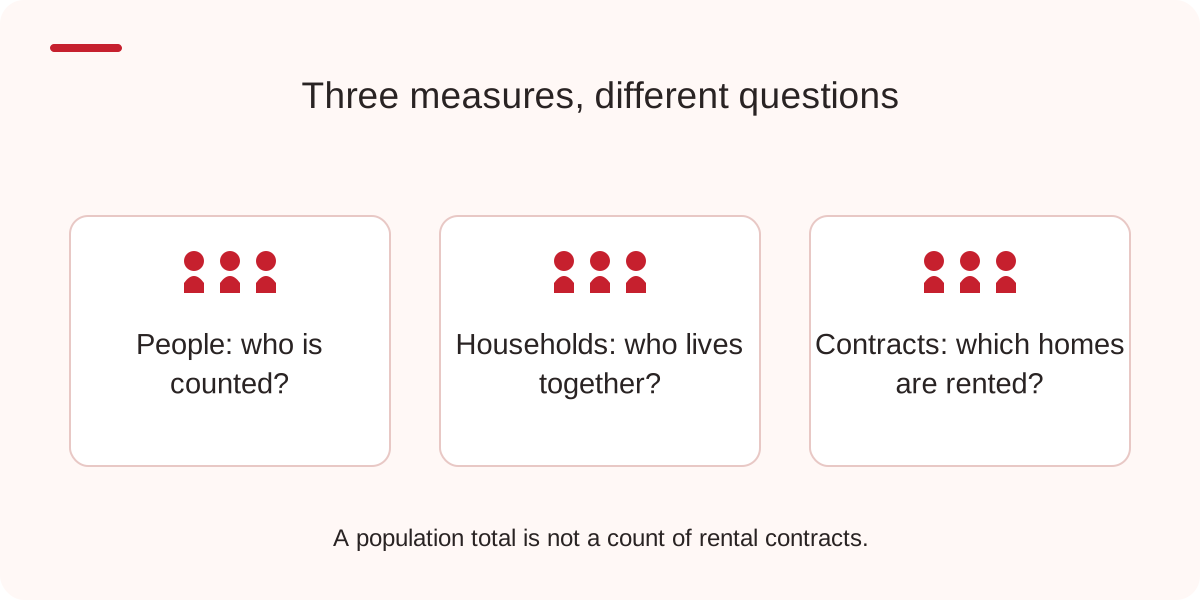
A population count describes people within the definition used by its publisher. It does not directly state how many additional homes are required, which types are needed or what those households can afford. Before using a demographic chart in a purchase case, identify its geography, reference date and whether it reports a measured result, an estimate or a projection. Keep these labels with the figure when it moves into a presentation. An undated population number is easy to misread as a current count for the neighbourhood under discussion.
The next step is to explain the missing connection rather than fill it with an arbitrary conversion. More people do not necessarily mean one new rental contract per person; people can share housing, join an existing household or use other accommodation arrangements. A buyer should therefore ask for evidence about the housing choices relevant to the candidate property. If the available information cannot identify that segment, describe the population evidence as background. Do not calculate a supposedly precise number of future tenants by dividing a broad headline by an invented household size.
Keep commuters distinct from residents
Activity around an employment centre may make a location worth researching without establishing where its workers live. Someone can work, shop or attend meetings in a district while maintaining a home elsewhere. For an apartment intended for professional tenants, investigate the actual journey and the alternatives a prospective occupant might compare. Check the route at relevant times where practical, and distinguish an operating transport connection from a proposed one. A nearby-looking point on a map does not resolve the daily travel question.
This distinction also helps when reading numbers describing daytime activity. A large daytime presence and a resident population are different concepts and must retain the publisher's definitions. Do not add them together as if they were separate groups of future renters. In the property file, record the employment connection as a question: which users would find this home convenient enough at the proposed total cost? The answer needs property-level reasoning and current evidence, not a conversion of footfall into tenancy demand.
Read tourism evidence within its actual coverage
Tourism evidence requires the same discipline. DET's reporting distinguishes international overnight visitors from hotel-sector measures. Its methodology also explains that hotel data and visitor counts do not describe identical groups. Read the definitions attached to the particular release before using a chart. The methodological notes matter more than the visual similarity of two upward lines: a visitor total, an occupied room-night total and an occupancy percentage answer different questions and cannot be substituted for one another in an apartment forecast.
A visitor to Dubai does not automatically represent a booking for a privately operated apartment. Accommodation choices can differ by trip purpose, group size, length of stay, location and service expectations. Treat any claim that citywide tourism directly supports the proposed property's revenue as an argument requiring additional evidence. Ask which comparable homes were used, what period was examined and whether the operating arrangement resembles the one being proposed. Keep the official citywide context separate from the operator's estimate and from your own investment decision.
Compare equivalent periods before describing a trend
Record the start and end dates of every series used in the discussion. A full-year total and a year-to-date total cannot establish a growth rate merely because both are recent publications. Nor can an increase from one month to the next automatically be described as an improvement over the same month a year earlier. Select the comparison that answers the question you are actually asking, retain both periods and explain any difference in coverage or definition. If that alignment cannot be made, avoid calculating the percentage.
Keep historical evidence useful without presenting it as a current operating result. DET's announcement about 2025 describes that completed reporting year; it does not establish the condition of a private rental in October 2026. Later releases should be checked before making a current statement. For the buyer, the practical task is to obtain an operating estimate tied to the intended start date and to understand what would change if conditions differed from the period behind that estimate. A dated historical example should remain labelled as historical throughout.
Audit an operator's occupancy estimate
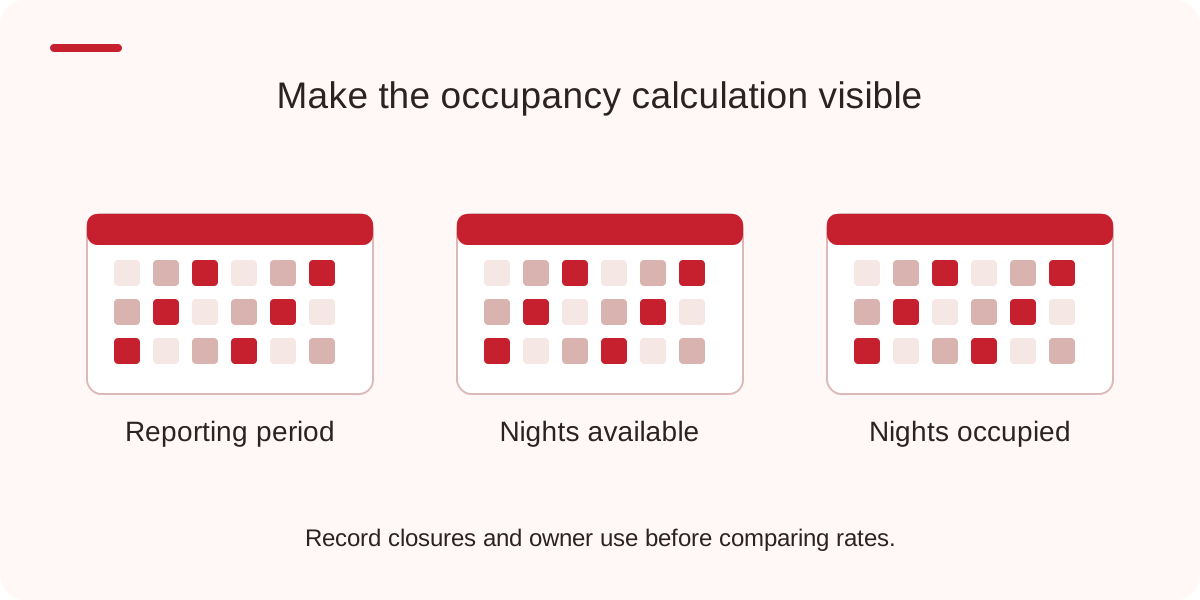
When an operator provides an occupancy forecast, ask what sits behind the percentage. Establish the period, the type of property, the location and the basis on which available nights were counted. Clarify how owner use, maintenance closures and periods before the property was ready to accept guests were treated. A percentage without its denominator is difficult to evaluate. Keep estimates distinct from documented results, and ask whether the evidence describes the operator's entire portfolio or a selected group of successful units.
Request an explanation of the range rather than only the central estimate. Which assumptions depend on pricing, guest reviews, furniture, the condition of the home or the operator's distribution arrangements? Which costs continue when the property is empty? The purpose is not to demand a guarantee from a forecast. It is to make the forecast intelligible and to identify assumptions that you can verify before appointing an operator. If the supporting evidence cannot be shared, retain a wider uncertainty range instead of calling the result independently confirmed.
Build a comparison around genuine alternatives
Comparable properties should represent choices that the intended occupant could plausibly substitute for your unit. Check the property type, usable space, condition, furniture, access and total cost, as well as the location. A spacious family apartment and a compact holiday studio should not become a single comparison group because they share a district name. Record the differences that could affect the choice and explain why a particular comparison remains relevant. An impressive number of poorly matched examples is not stronger evidence than a smaller, carefully described set.
Separate advertised availability from completed rental evidence. An asking rent records an offer at a point in time; it does not prove the final terms or how quickly the home was occupied. Repeated listings can also describe the same property, so remove duplicates where you can establish them without inventing missing identities. Keep the observation date and the source for each example. Where the evidence is limited, state that limitation in your private decision record and seek the next useful document rather than extending the conclusion beyond what the sample supports.
Include the cost of living in the home
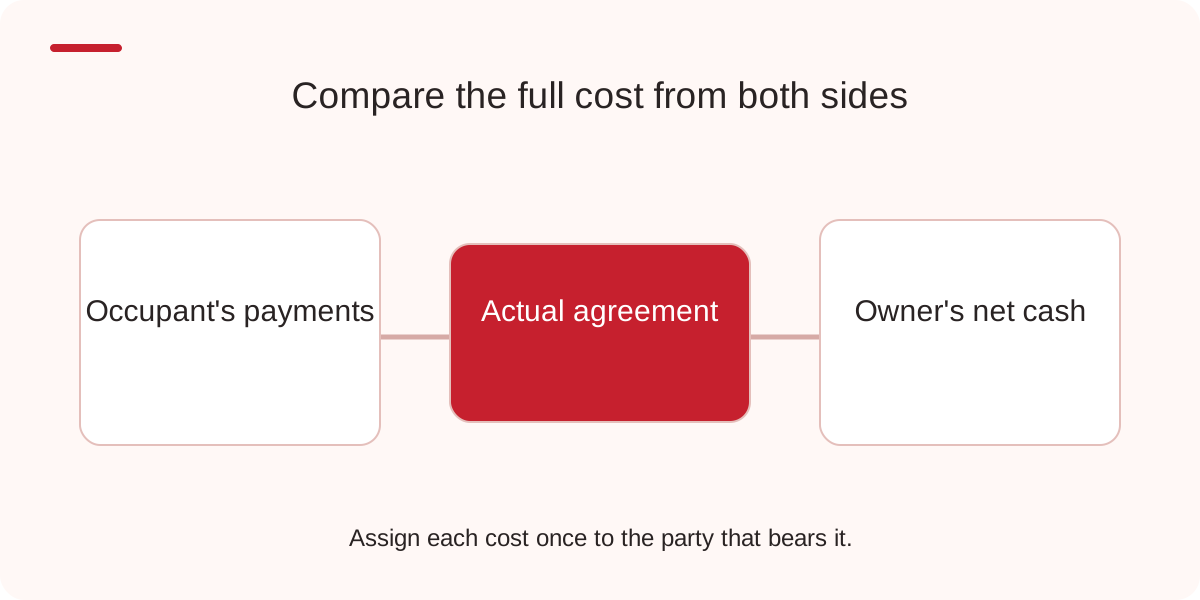
A prospective occupant compares more than the headline rent. Depending on the arrangement, utilities, cooling, parking, furnishing, deposits and other agreed charges may affect the amount they must pay or keep available. Obtain the actual terms and identify which costs belong to the owner and which to the occupant. Do not copy a cost allocation from another building or assume that every furnished or unfurnished offer works the same way. The comparison should represent the real package being offered.
This is a different calculation from the owner's net return. One shows what the occupant would need to pay; the other shows what remains for the owner after the costs they bear. Keep the two views alongside one another so that an attractive rent is not justified by quietly excluding a cost from both. If the proposal depends on an all-inclusive price, establish the scope and the financial responsibility for higher usage. A clear comparison makes it easier to judge whether the intended user has a credible reason to choose this home.
Test access and usability through evidence
The property's practical fit can be investigated before a demand forecast is accepted. Check the route from the entrance to the unit, arrangements for moving in, the usable layout and any restrictions relevant to the proposed use. For a household, examine the everyday needs that the buyer has actually identified rather than adding a generic list of nearby landmarks. For temporary accommodation, ask how arrival, access and service requests would be managed. Keep building-wide facilities separate from features included in the particular unit.
Use a visit, current photographs and written responses to resolve specific questions. Record what was observed and what remains a statement by another party. If a route depends on future infrastructure, test the current alternative as well as the proposed benefit. Avoid assigning minutes of travel from an unverified map impression or describing a planned service as operating. Demand reasoning becomes more useful when it connects a real user need to something that has actually been checked at the candidate property.
Confirm the operating route separately
Commercial appeal does not establish permission to operate. DET states that apartments and villas offered as Dubai holiday homes must be registered and approved before listing. That general requirement does not establish eligibility or approval for a particular property. Before accepting a short-stay business plan, identify the proposed operator and obtain the relevant property-specific confirmation. Keep the administrative position in the file alongside the commercial proposal so that a plausible revenue estimate does not conceal an unresolved operating condition.
For an ordinary tenancy, review the contract and the applicable registration arrangements, including DLD's Ejari service where relevant. Do not treat a change between rental models as a simple switch in a spreadsheet. It may involve different agreements, responsibilities, costs and practical preparation. If your plan depends on being able to change use later, investigate that assumption before purchase with the appropriate professional or authority. Record who confirmed the proposed use, which property the confirmation covers and whether any conditions remain outstanding.
Use a worked comparison without inventing market rates
Consider two hypothetical options being evaluated for different purposes. The first is a completed apartment with documented access and an identified conventional tenancy proposal. The second is a furnished home promoted through an operator's short-stay estimate. Do not rank them by comparing the first property's contractual annual rent with the second property's projected gross revenue. Start by putting both on the same ownership period and identifying what is confirmed, what is estimated and what remains conditional. The exercise concerns the quality of the comparison, not a claim about actual rents.
For the first option, ask about the payment schedule, responsibilities and any conditions affecting possession. For the second, request the basis of available nights, pricing assumptions, operating costs and the permission position. Then work out when cash would become available to the owner in each case. A higher top-line estimate may require more working cash or expose the owner to a different pattern of interruptions. The decision should reflect that difference explicitly rather than turning two unlike figures into an apparently precise yield ranking.
Examine competing supply at the relevant time
Demand analysis becomes incomplete when it ignores the alternatives that may be available during your ownership period. Record relevant competing homes separately from projects that have only been announced or are still under construction. Use the project identity and current source to assess the stage of a future scheme. DLD's project-status service is one official route for checking a Dubai project. Its information answers a project-status question; it does not itself predict how many units will be offered for rent when your property becomes available.
Keep the comparison close to the intended occupant's choices. A future project with a different layout, price category or use may not be a direct substitute, while an existing building just outside the chosen district may be relevant. Do not include every announced unit as certain near-term competition or remove it entirely because delivery is uncertain. Record the uncertainty and test more than one timing scenario. That produces a more useful purchase discussion than a headline claiming that population growth must absorb all future supply.
Decide what would change your conclusion
Before asking for another presentation, identify the missing evidence that could materially alter the decision. It might be a clearer comparable, an operating quotation, an actual cost schedule, a condition report or confirmation of the permitted route. Give each unresolved item a purpose and an owner. This keeps research proportionate and prevents a growing collection of reports from substituting for a decision. A document is useful because it resolves a relevant question, not because it makes the investment file thicker.
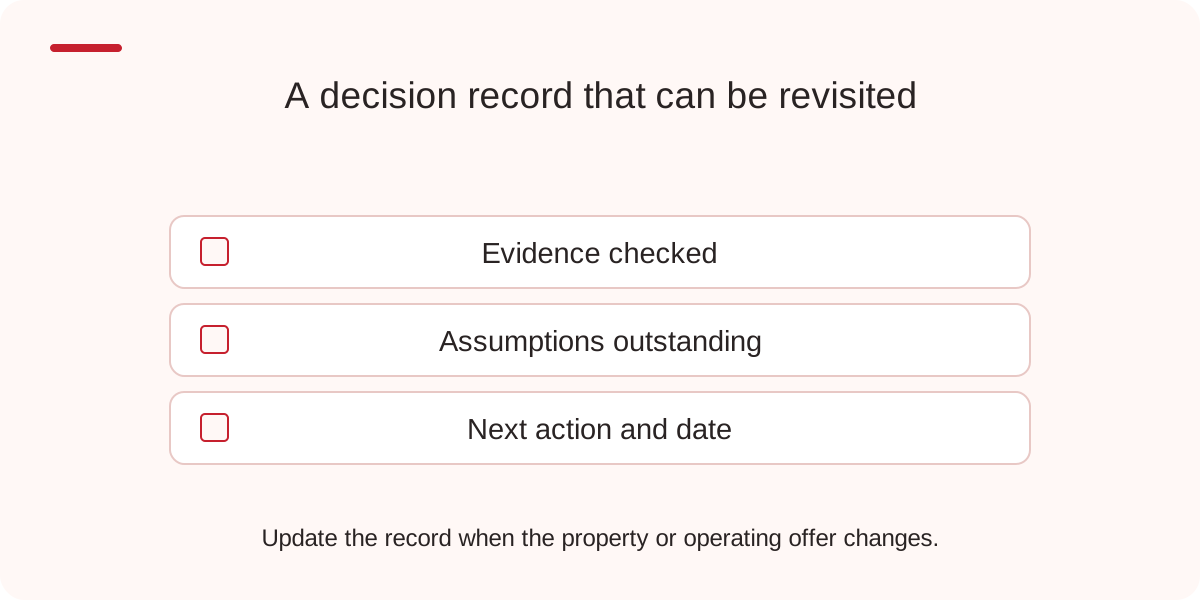
Finish with a dated statement of the occupant hypothesis, the evidence supporting it, the evidence that challenges it and the assumptions still carrying the proposal. Link the detailed cash-flow and rental-operation work to that record rather than reproducing their calculations here. Review the file when the property, operating offer or intended use changes. A sound conclusion may be to proceed with further checks, choose another unit or wait. Broad population and tourism narratives should help direct the investigation; the individual purchase still needs its own defensible case. Confirm consequential verbal answers in writing, with the date and a link to the relevant document.
Keep these items in the property file
- The intended occupant and the need this home would meet.
- Dated comparable records, with differences and duplicate listings identified.
- The operator's assumptions, costs and definition of available nights.
- Written confirmation of the proposed operating route for the specific property.
Take the next part of the decision further
- Model when rental cash reaches the owner
- Compare long-term and short-term rental operations
- Research a Dubai district using comparable evidence