
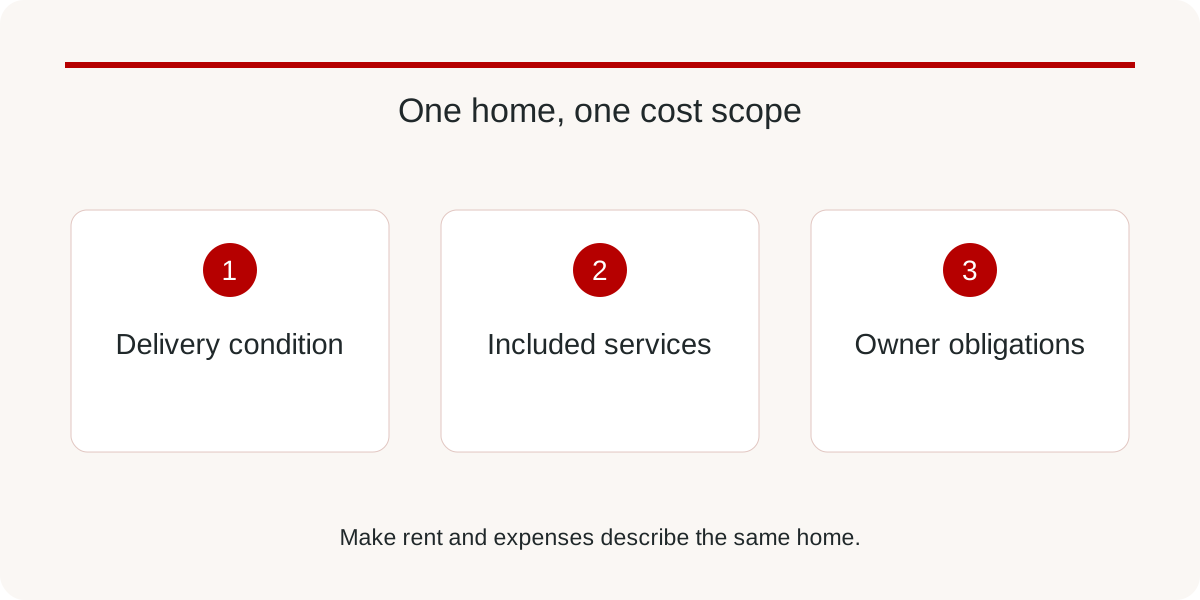
Start with the condition promised to the tenant, then trace each cost to a service, a responsible party and a payment date. An annual surplus alone does not explain the cash needed before occupation.
Start with the home that will actually be let
A rental estimate becomes useful only when it describes the same home as the expense estimate. For a Sharjah apartment, identify the building, unit, parking arrangement, furnishing position and intended residential use before collecting figures. A quotation for an empty apartment cannot be compared directly with a rent estimate that assumes new furniture, working appliances and immediate occupation. Write down the condition in which the tenant would receive the home. That description becomes the common reference for the letting agent, building manager and maintenance contractor, so that each person prices the same outcome instead of a different version of the property.
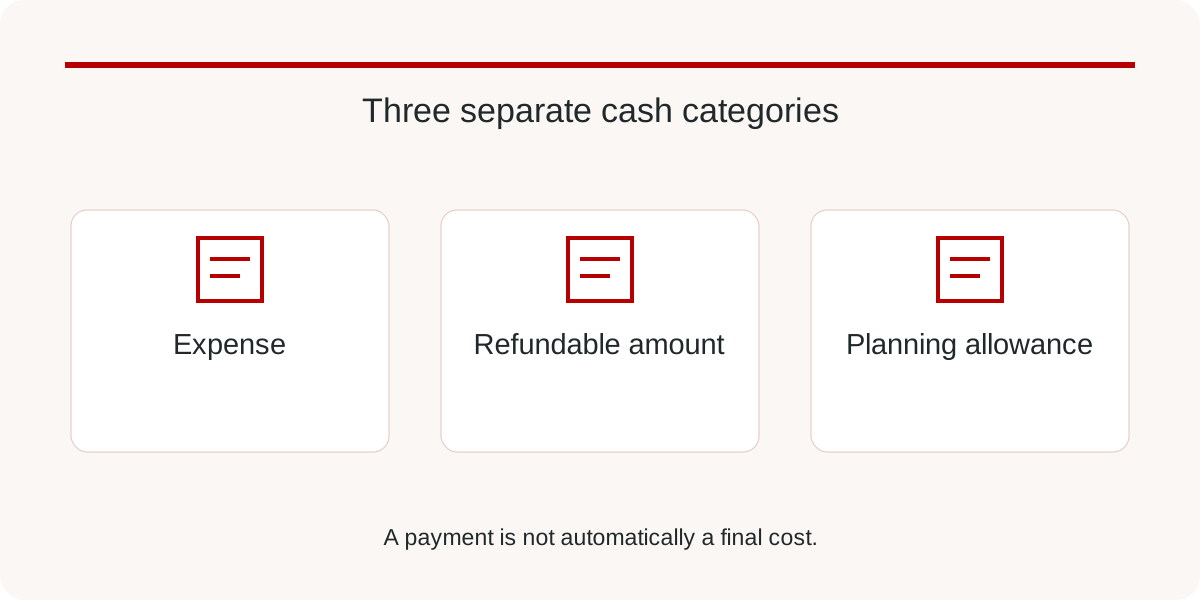
Divide the financial file into money needed to acquire the property, money needed to make it lettable and money needed to keep it operating. This article concerns the last two parts; the offered property right and purchase approval belong in a separate review. Within the operating file, distinguish an expense from a refundable amount and an allowance from a confirmed quotation. Also record whose payment responsibility has actually been established. These distinctions prevent an attractive annual rent from concealing the cash you must provide before the first tenant arrives, while avoiding the opposite mistake of charging every tenant expense to the owner.
Connect the lease to the current municipal channel
Sharjah City Municipality's attestation notice directs new rental-contract attestation requests to Aqari through Digital Sharjah. Follow that official starting point when checking the current route for the property and transaction. A saved screenshot of an old application screen should not determine a new budget. Ask the person handling the tenancy which service applies, what information they need from each party and what current quotation or official charge supports the amount included. Keep their service fee separate from any authority charge, and do not assume that a fee charged in another emirate describes this process.
For practical planning, identify who prepares the contract, who checks the unit details, who submits the relevant request and who keeps the resulting record. This is an allocation of work, not a claim that every task must legally be performed by a particular party. Resolve the required sequence with the responsible service before promising an occupation date. If the home is outside Sharjah City's administrative scope, check the competent local authority rather than applying a city service automatically throughout the emirate. A budget should refer to the actual jurisdiction and service, with unresolved items marked for confirmation rather than assigned a familiar percentage.
Match utility information to the correct premises
The public SEWA Start Service page distinguishes owner and tenant applications and includes premises identifiers such as a consumer number or meter number. That supports a simple preparation rule: match the utility reference to the home, rather than relying on the sales description alone. It does not establish every requirement for every applicant. Before the change of occupant, ask SEWA which account route and current documents apply to the intended arrangement. Record the answer and the responsible applicant. Do not select an owner-occupation route merely because the landlord owns the property when the intended occupant is a tenant.
Ask for the account and billing position that matters at the handover boundary, using documents shared with appropriate permission. A historic bill may help identify a meter or billing period; it does not promise the next household's consumption. Check how closing readings, an outstanding balance, a new application and any refundable security amount would be handled for this case. Budget only the sums you are actually responsible for, while noting a temporary cash requirement if it must be advanced. Keep setup, consumption and refundable balances on separate lines so a single utility total does not obscure their different purposes.
Find out what cooling really includes
Cooling deserves its own enquiry because an advertisement's short description may leave several questions unanswered. Ask what equipment serves the unit, who supplies the service, how usage is measured, whether any fixed charge applies and which maintenance tasks belong to which party. Obtain the applicable agreement and a recent representative statement where available. Do not infer the arrangement from another tower's system or the appearance of the controls inside the apartment. An inclusion in a rental offer needs a clear definition: which service is included, within what conditions, and who pays if the arrangement changes between tenancies?
The same distinction helps when assessing an apparently low running cost. A bill for an unoccupied home is not a reliable estimate for a household using cooling throughout its normal routine. Ask what period the evidence covers and whether it includes all relevant charges. Keep a usage assumption separate from an equipment-repair allowance. If a contractor identifies a fault, obtain a scope and quotation rather than applying a generic annual maintenance figure to an immediate repair. The goal is to explain the cost structure sufficiently to compare properties, without claiming a standard cooling tariff or universal allocation of responsibility across Sharjah buildings.
Read the building statement as a set of services
Request the current building or community charge information applicable to the selected unit and establish what period it covers. A total without a service description is difficult to evaluate. Ask which services are included, whether any amounts concern earlier periods, and whether additional work has been notified. Keep amounts already due separate from an estimate for the coming year. The relevant documents and transaction terms should resolve who bears a balance around purchase or tenancy commencement; the spreadsheet must reflect that answer rather than invent it. Record the evidence date so last year's statement does not quietly become this year's confirmed cost.
Then compare the service descriptions. Two homes with different annual charges may include different arrangements for common areas, equipment or facilities. List only supported inclusions, and investigate whether an apparent saving creates a separate expense elsewhere. Ask how a maintenance concern is reported and how the owner receives a response. A shared facility should be assessed through the access and operating arrangements that apply to the tenant, not through a photograph. This method does not rank a building by the size of its charge alone. It connects an actual obligation with the service delivered and the records available to the owner.
Price the work between purchase and occupation
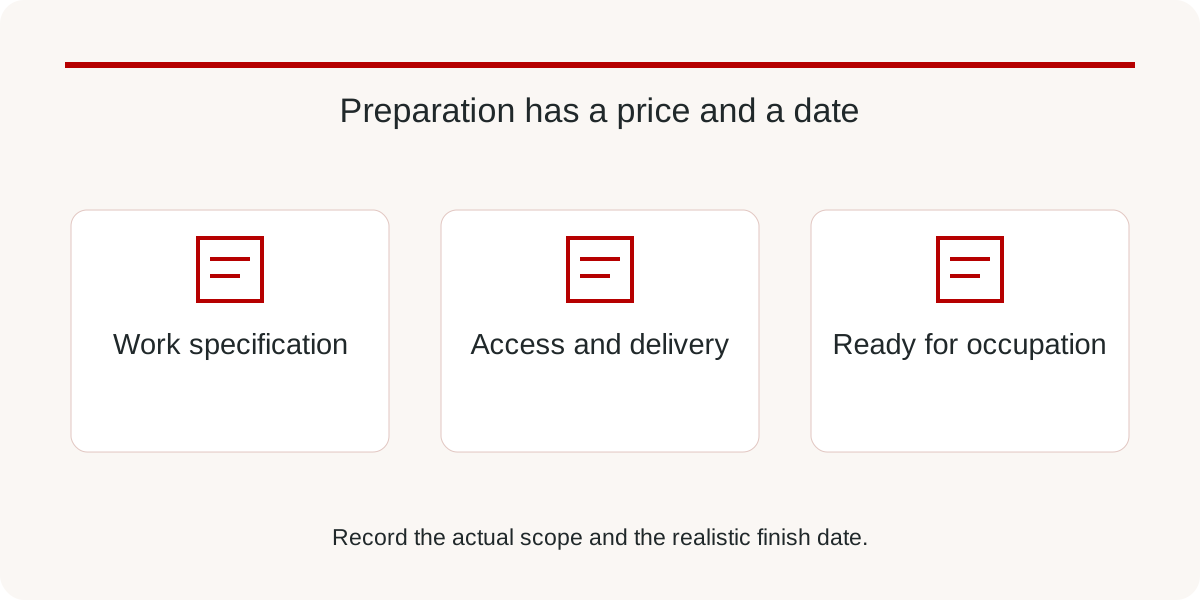
Inspect the home with the intended letting condition in mind. Separate work needed before occupation from cosmetic improvements you may choose and replacements that can reasonably be planned later. A contractor's quotation should identify the item, location, quantity, materials, access assumptions and what counts as completion. For a leak, for example, painting the affected surface and resolving the source are different scopes. Ask a competent specialist to investigate where necessary; do not convert an unverified visual impression into a diagnosis. Photographs and a clear brief help competing quotations address the same problem rather than offering incompatible totals.
Allow for the time as well as the price of preparation. Ask about material availability, access coordination, waste removal, testing and the final inspection. If furnished letting is intended, check delivery access and the dimensions of the actual rooms before committing to purchases. Keep discretionary furnishing choices separate from building charges and tenancy administration. A lower furniture quotation may exclude assembly or appliance connection, so compare the delivered result. Establish the date on which the property can realistically be presented as ready. Advertising a target rent before understanding the preparation programme can make a short delay look like an unexplained income shortfall.
Put cash dates beside the annual totals
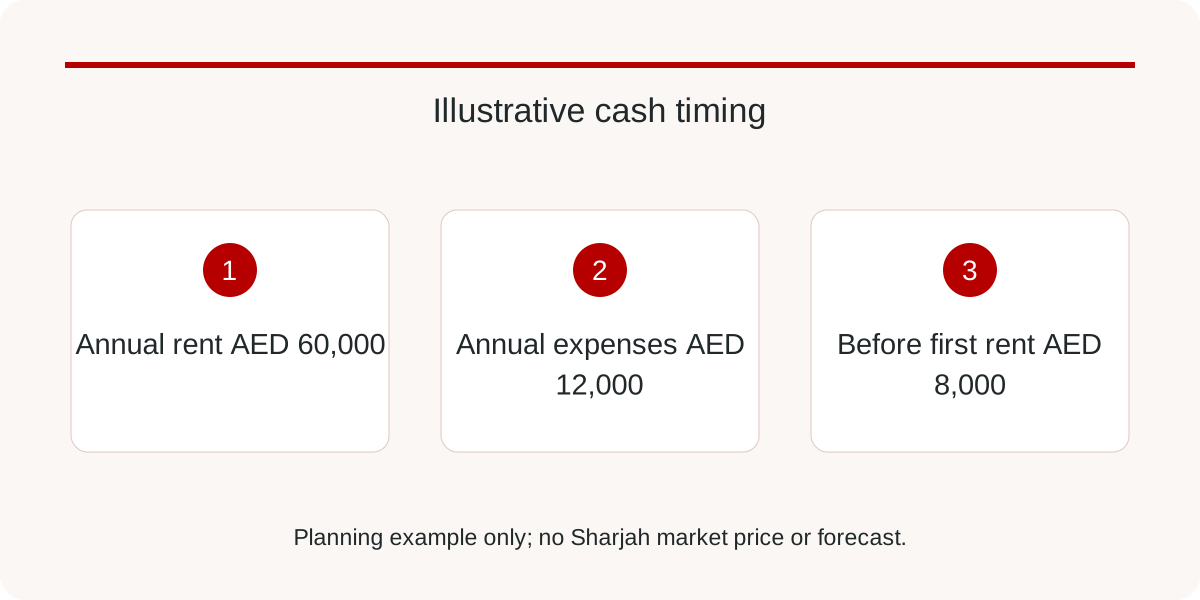
Consider a purely illustrative planning case, unrelated to Sharjah market prices. Suppose a proposed lease totals AED 60,000 over a year, with four equal payments of AED 15,000. Suppose the owner's preparation and operating expenses total AED 12,000, of which AED 8,000 falls due before the first rent payment. The annual difference would be AED 48,000 before financing, taxes if applicable and any other excluded costs. Yet the owner still needs access to AED 8,000 at the beginning. An annual surplus does not fund a bill that must be paid before the receipts arrive. The example assumes collection and is not a forecast or recommended rent.
Now test the timing assumption rather than immediately changing the annual rent. Move the first receipt to a later date in your planning sheet and identify which bills would still fall due. Record any additional expense separately; do not automatically call a late receipt a permanent rent loss. A genuine empty period and a delayed payment are different risks and may need different responses. Keep a dated cash calendar showing opening funds, receipts, payments and the remaining balance. Its purpose is to reveal the largest temporary funding need under each stated scenario, so that the chosen reserve addresses a concrete exposure rather than an arbitrary reassuring number.
Compare rents with the same operating promise
When collecting rental evidence, describe what each competing home offers to its occupier. Note the layout, condition, furnishing, parking and any documented inclusion that changes the household's total cost. Record whether the figure is an advertisement, a completed letting supported by evidence, or an agent's opinion. The date and contract terms matter as much as the headline amount. A high asking rent from a differently equipped home should not be used to justify your income assumption while the expense side assumes a bare apartment. Explain why the comparison belongs in the set and what important differences remain unresolved.
For an already tenanted purchase, distinguish the current lease position from a proposed future rent. Obtain appropriate records of contractual payments and actual receipts, with personal information handled only as necessary. Ask a qualified local adviser to explain relevant renewal, notice and change conditions before relying on a new rent or occupation timetable. This guide does not supply a rent increase entitlement or a vacant-possession promise. For an empty property, test the letting estimate with the actual readiness date and competing homes. Keep the preferred case and a more demanding cash scenario visible together; neither should be described as an assured return.
Compare management quotations by their boundaries
A management quotation becomes comparable when you can see the work it covers. Ask whether tenant communication, routine inspections, maintenance coordination, rent follow-up, reporting and preparation for a new tenancy are included or priced separately. Determine which charge is fixed, which depends on a transaction and which depends on an amount collected or contracted. Do not assume the calculation basis from a percentage alone. Also ask whether the quotation includes applicable tax and third-party expenses. A concise schedule of included work and exclusions is more useful than a promise to take care of everything without an auditable definition.
Agree how decisions are authorised before an urgent repair arrives. The owner should understand who may approve expenditure, what evidence accompanies a request and how an emergency is escalated. These are matters to settle in the actual management arrangement; no universal Sharjah approval threshold is assumed here. Ask how invoices, photographs and completion records reach the owner, and how a change of manager would be handled. If a quotation depends on a long commitment or an exit charge, include that in the comparison. The cheapest recurring fee can be a poor comparison if the services needed for this home sit outside it.
Keep deposits and replacement allowances distinct
Money received from a tenant may include amounts that are not rent. Identify each amount by purpose and the applicable agreement, and keep its records separate from the income line. A refundable deposit should not be treated as freely available profit or used to make an operating deficit disappear on paper. Establish how it is held, reconciled and returned under the applicable terms and law. At the start of occupation, a clear condition record and item inventory can support later discussion. They do not predetermine deductions or give the owner an automatic right to retain a disputed amount.
Replacement planning belongs in another part of the file. List the equipment or furnishings that the owner is responsible for and note condition, available warranties and any known near-term work. An internal allowance for future replacement is a budgeting choice, not proof that the same amount will be spent annually. Separate it from an actual invoice and from money held for another party. If a repair is reimbursed, reconcile the reimbursement against the related expenditure instead of counting the gross receipt as additional rent. These small bookkeeping distinctions make it easier to understand what the property earned, what it consumed and what cash remains restricted.
Use the first operating months to correct assumptions
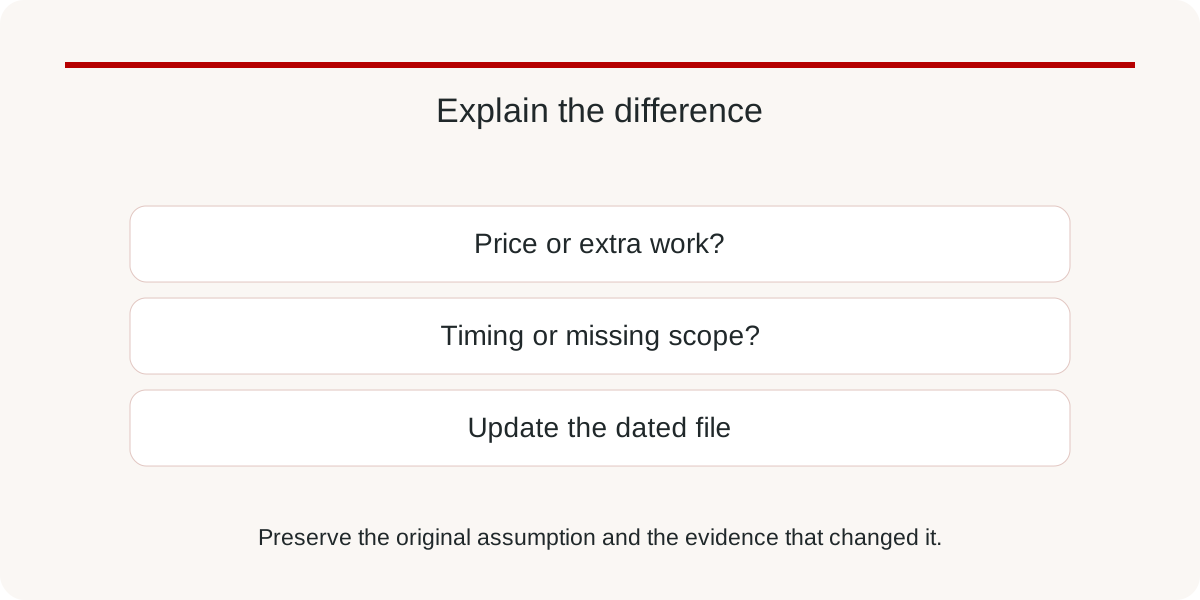
Once the property is operating, compare the budget with dated evidence. For each difference, ask whether the cause is a price change, an extra task, a timing difference or an item omitted from the original scope. A payment for several months should not be read as a sudden monthly cost increase. Similarly, a large rent receipt covering a future period is not evidence that the property earned that amount in one month. Keep the contract schedule and cash statement connected but separate. This gives the owner a usable account of performance without confusing bank movements with the period to which they relate.
Review the highest uncertainty first. If cooling responsibility remains unclear, resolve that arrangement rather than spending time refining a minor stationery allowance. If preparation took longer than expected, identify whether access, approvals or the contractor's scope caused the delay and amend the next turnover plan. Preserve earlier assumptions and the evidence that changed them so the file explains its own history. Use the exercise to improve decisions about this property. A few months of one apartment's bills cannot establish operating costs for all Sharjah homes, and a successful tenancy does not prove that the next letting will follow the same timetable.
Decide from the complete file
Before committing to the rental case, bring together the defined letting condition, the municipal service enquiry, premises references, building and cooling arrangements, preparation quotations, management scope and dated cash scenarios. Mark which items are confirmed and which still depend on an answer. If one unresolved item could change the decision materially, assign a person and a date to resolving it. Avoid filling the gap with the most favourable assumption simply to complete the table. The result should show both the expected operating position and the cash needed to reach it, alongside the purchase funding assessed elsewhere.
PGI can use that file to discuss relevant property alternatives and identify the next questions for the appropriate authority, manager or adviser. Bring the exact home and current documents rather than an emirate-wide rental headline. A worthwhile comparison may reveal that a lower rent with clearly defined costs suits your funds better than a higher rent dependent on unfinished work or uncertain inclusions. That remains a decision for your circumstances, not a guarantee about either property. Update the file when a quotation, condition or contract changes, and retain the version used for the decision so the reasons remain understandable after the first tenancy begins.
Before accepting the operating budget
- Define the exact condition in which the tenant receives the home.
- Confirm the competent municipality and current service quotation.
- Match premises references and clarify cooling and building inclusions.
- Separate preparation, recurring expenses, deposits and replacement allowances.
- Test the payment calendar as well as the annual total.