
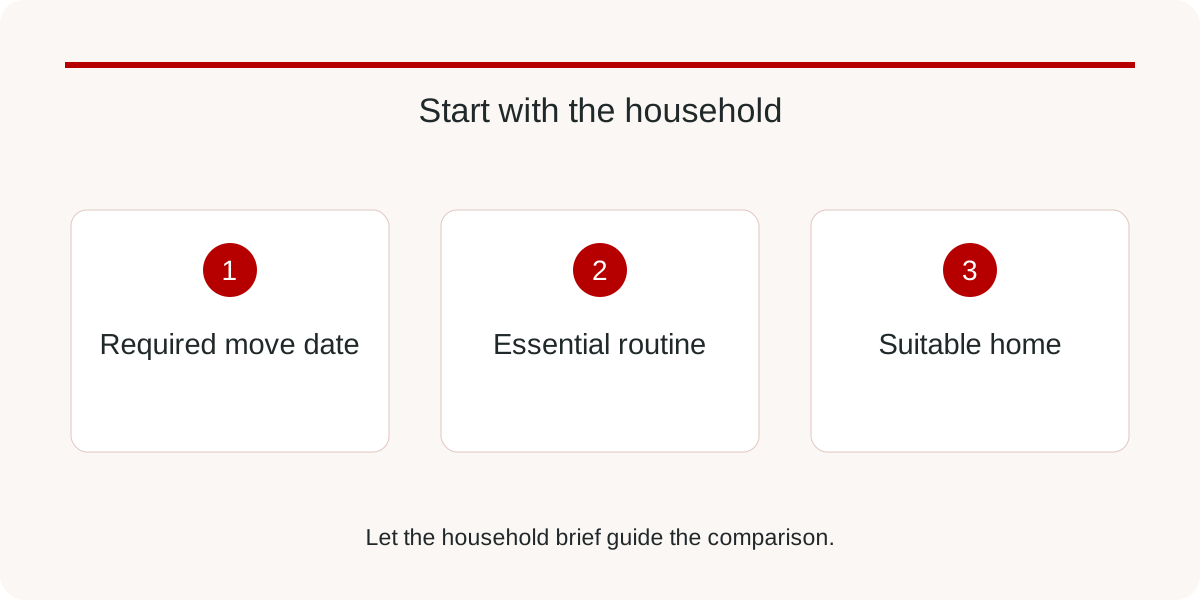
Match the home to the date and routine of the people who will use it. Al Majaz and dated Aljada announcements show why the surrounding destination, individual building and future plan need separate evidence.
Begin with the date your household needs the home
The useful starting point for this comparison is a date, not a label such as new or established. Decide when the household needs to live in the property and what must work from that first week. A completed apartment may need alterations before it suits you; a home in a developing community may already be occupied while other parts remain under construction. Neither description settles the decision. Write a short account of an ordinary weekday, including the people who leave at different times, the trips that cannot move and the person who needs the home to remain quiet during the day.
Then separate essential conditions from improvements you would welcome later. A workable entrance, an appropriate home layout and a confirmed schooling arrangement may matter immediately, while a new leisure venue may be something you can wait for. Another household could rank these differently. The comparison should make those preferences visible rather than pretend that one type of neighbourhood suits everyone. For an investment purchase, use a clearly described intended occupier as a planning hypothesis, not as evidence that tenants are waiting. This guide examines practical fit and the timing of facilities. The property right, purchase approval and letting budget need their own linked reviews.
Use Al Majaz as a place to investigate, not a promise attached to every apartment
Visit Sharjah's Al Majaz Waterfront page presents an existing lakeside leisure destination with the Sharjah Musical Fountain, mini-golf and Maraya Art Park. That is useful context for exploring an established urban setting. It does not establish a view, a walking route or facility access for an apartment advertised under the wider Al Majaz name. Start at the entrance of the particular building and investigate the route you would actually use. A pleasant visit to the destination and a convenient everyday journey from home are related questions, but they require different evidence. Keep the home itself at the centre of the enquiry.
An established setting lets you observe how a street and building are being used now. During a visit, note the entrance arrangement, delivery stopping points, pedestrian crossings and the way residents reach their allocated parking, where that can be checked lawfully. Return at a time relevant to your routine rather than treating a quiet viewing as the whole experience. Record observations as observations on that date, not permanent characteristics of every nearby building. A desirable public destination can coexist with a home that fails your requirements for access, privacy or layout. Conversely, an unremarkable frontage may lead to a well-suited home that deserves a closer inspection.
Read Aljada as a collection of different stages
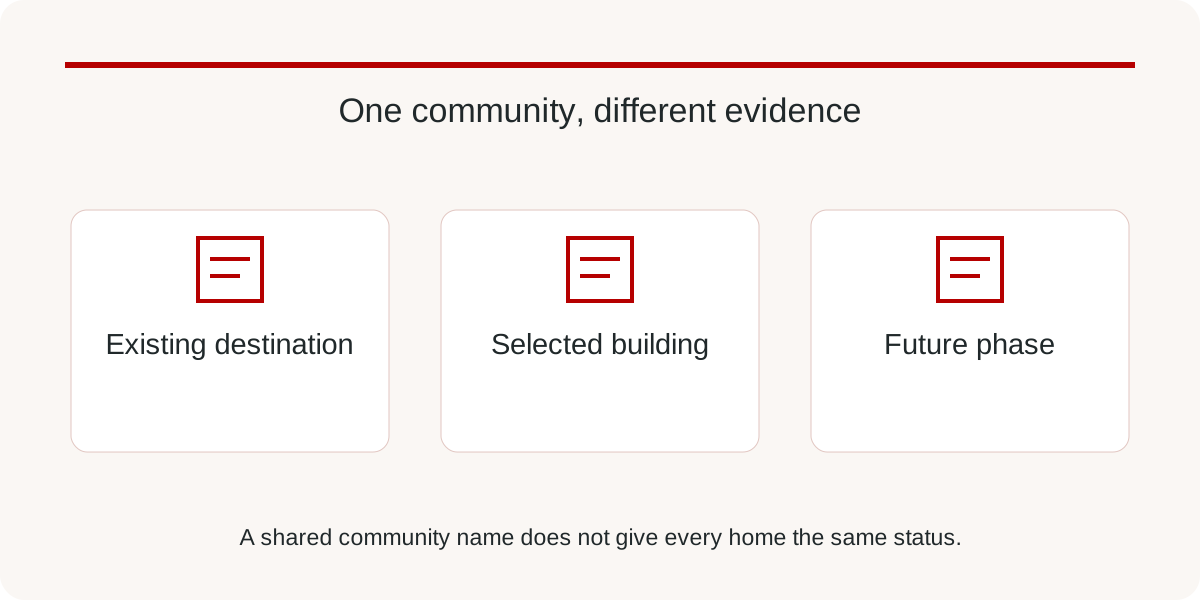
Arada's announcement of 9 April 2026 reported the first residents moving into Vida Residences Aljada after completion of its four-building complex. Arada's announcement of 12 March 2026 described construction contracts for other Aljada residential blocks, scheduled for delivery in the second quarter of 2028. These dated developer statements illustrate why a community name cannot supply one completion status for every home. They do not confirm today's availability or the readiness of a selected unit. Identify the exact building and phase, then ask for current evidence tied to that property. A completed component and a future component can belong to the same wider development.
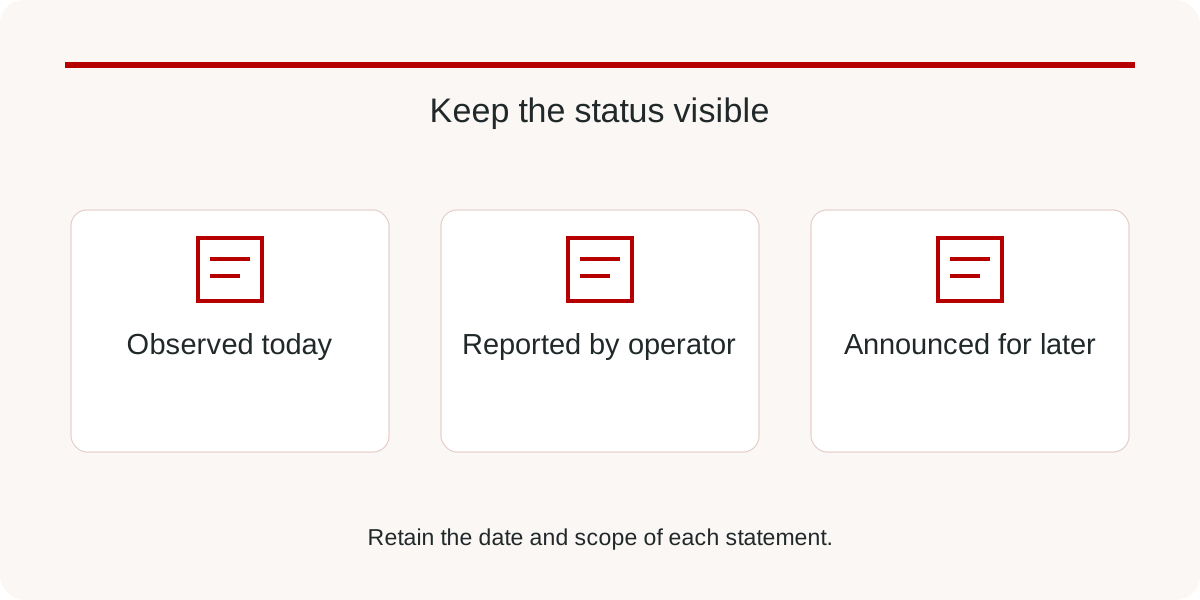
Avoid treating every existing service in a large community as a benefit equally convenient to all its phases. Establish the actual route from the chosen entrance and the conditions for using the service. Also keep the developer's description of future works distinct from an operator's confirmation that a venue is serving users. A masterplan can help you understand the intended arrangement, but it is not a timetable for your household. When an announced feature matters, retain its source date and the wording about its status. Recheck it near the decision date rather than allowing an old expected opening to become an assumed fact.
Give every important feature its own evidence line
Build a small comparison sheet with one row for each feature that could change the decision. Use columns for the exact home, the feature, its current status, the source, the date and what remains to be confirmed. Useful status descriptions include personally observed during a permitted visit, reported open by the operator, announced, under construction and unresolved. Do not collapse these into a single tick meaning available. If the evidence is a sales statement, say so. The discipline is especially helpful when a presentation mixes photographs of completed areas, images of another phase and renderings of the eventual community within the same brochure.
Read the plan with the sales representative and ask which parts belong to the selected building's contract or specification. A shaded garden on a community plan does not identify who can enter it, when it will open or whether its upkeep is included in your charges. Keep the answers at the scale they actually support. A project-wide statement should not turn into a private unit feature. Where a future element is essential, identify the appropriate document and adviser needed to understand the commitment. The sheet is a way to expose the question; it cannot create a contractual guarantee from an attractive drawing.
Follow the journey from the front door
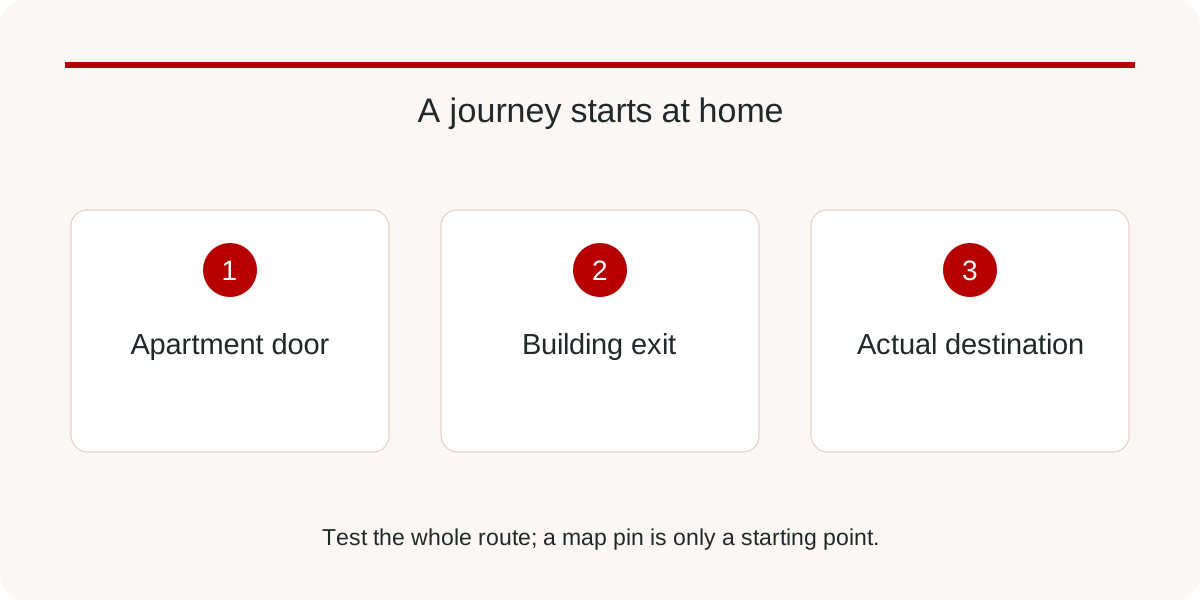
Test the beginning and end of the journeys that matter, not just the road between two map pins. Trace the route from the apartment door to the lift, lobby, parking or pedestrian exit, and continue towards the destination you would use. Check whether the path involves steps, crossings, a different building entrance or a route unavailable to ordinary residents. For someone using a stroller or mobility aid, a detail missed during a quick viewing can change daily practicality. Ask permission where required and stay within accessible areas. Do not enter a construction site to test a route shown on a plan.
If regular travel to Dubai or another part of Sharjah drives the purchase, test your own workday pattern in the relevant direction and at relevant times. Include school or care stops where they genuinely form part of the routine. Record the date, method and conditions of any journey you measure, rather than turning a single result into a universal commute claim. Consider what happens when the preferred vehicle is unavailable or an entrance changes during works. This is a resilience question about your household, not a prediction of congestion. A quoted proximity to a major road cannot answer it without examining how the home connects to that road.
Check the services needed during the first month
A neighbourhood comparison becomes more concrete when you identify a small set of essential services and verify them individually. For schooling, contact the relevant institution about the actual child's stage, the intended starting date and the application process. A school name on a community plan does not establish a place, admission or a suitable transport arrangement. For healthcare, investigate the service you need and its practical booking and coverage arrangements rather than assuming that a nearby building provides it. Keep personal information within the appropriate provider's process. Public location information can guide an enquiry; it cannot complete an individual eligibility or availability check.
Do the same for ordinary tasks such as food shopping, deliveries and collecting household necessities. Work out which of these can be handled from services operating now and which depend on an announced addition. A future shop may be welcome without being necessary to the purchase. If it is necessary, identify the alternative and test whether that alternative is acceptable while you wait. Do not describe a planned outlet as open because neighbouring homes have been delivered. The useful question is whether the household can function comfortably during its actual first month, including the inconvenient days, rather than whether the finished masterplan would eventually look complete.
Compare the homes inside the neighbourhoods
Return to the floor plan after exploring the surroundings. Test the usable room dimensions, furniture positions, circulation, storage and the relationship between rooms against the people who will occupy the home. A larger stated area does not automatically solve a specific layout problem. Distinguish the recorded measurement from your practical assessment, and ask for clarification where the documents use different area definitions. Check the exact unit's orientation and openings instead of transferring a showroom impression to every apartment in the building. The same bedroom count can support very different routines depending on how rooms, bathrooms, doors and shared living space are arranged.
For a completed home, inspect what is actually present and obtain appropriate technical advice about condition. For an off-plan option, compare the contractual specification, drawings and stated inclusions, retaining the version and any written clarification. Show furniture and demonstration finishes may not form part of the purchase. Neither building age nor a new finish establishes the quality of concealed systems. Give condition, fit and the cost of necessary changes their own place in the comparison. This stops a strong preference for a waterfront setting or a new community from obscuring a home that cannot accommodate the household's basic needs without work you have not yet assessed.
Examine the surroundings beyond the current photograph
Look beyond the boundary of the selected building and ask what adjoining plots and access routes mean for this home. In a community developing in phases, request the current plan and available information on nearby works. In an established street, investigate visible changes and any supported information relevant to the property rather than assuming the surroundings will never change. An open view observed today is not a promise that no building can appear later. Do not invent a future obstruction either. Record what is known, what is proposed and what cannot yet be confirmed, keeping the photograph separate from any planning conclusion.
During an authorised visit, consider how the home would be used while nearby work or maintenance is taking place. Ask about current access arrangements, delivery routes and available notices relevant to residents. These are questions for the actual setting, not grounds for labelling every developing community noisy or every established building quiet. Someone working from home may weigh the uncertainty differently from someone away during most working hours. A buyer planning to move much later needs a different assessment again. Link the concern to a particular activity and period, then identify the evidence or alternative arrangement that would allow a decision without relying on a blanket neighbourhood stereotype.
Put a workable interim arrangement beside each future benefit
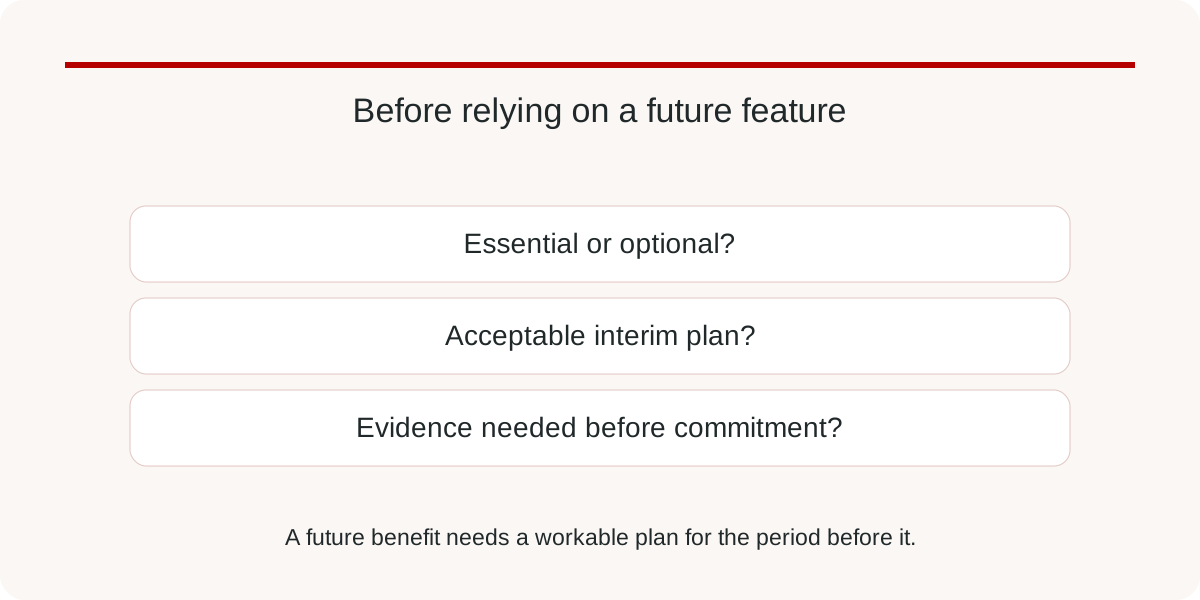
For every important feature that is not yet available, write down how life would work before it is. The alternative may involve using another destination, adjusting a routine or choosing a different property. Assess its practical burden and any costs you can substantiate; do not invent an allowance to make the comparison look finished. If there is no acceptable interim arrangement, that feature is a condition of the choice rather than a minor bonus. This approach allows a phased community to be considered fairly. It neither dismisses future improvements nor lets an expected opening carry the entire case for a home needed sooner.
Keep the dwelling's readiness distinct from the wider community programme. Ask what evidence is needed for the selected property's handover and occupation, and what remains for separate amenities or infrastructure. A construction-completion announcement is not proof that your purchase, inspection, access and service arrangements have all finished. Obtain current transaction-specific guidance before making irreversible moving commitments. For a completed purchase, preparation and alterations can also create an interim period. Compare the real paths to a usable home on both sides, including the consequences of a later date, instead of giving one option an immediate start and the other every possible delay.
Try the comparison with two different households
Consider a fictional household that needs to move at the start of the next school term, has fixed daily journeys and cannot easily change its temporary accommodation. Its first questions concern a usable home, confirmed essential arrangements and a realistic moving sequence. An established location may provide more observable evidence for that particular decision, but the building and unit still require their own checks. A completed home within a phased community could also meet the brief. The household should reject an unsuitable timetable, not a broad label. No named building in this example is being recommended, and no school place or occupation date is assumed to be available.
Now consider a second fictional household with flexible timing that wants a particular layout and can continue its current living arrangement while assessing future options. It may be able to consider a home whose delivery or surroundings are still developing, provided the actual contract, funding and interim plan fit. That flexibility does not make delays harmless or future amenities guaranteed. It simply changes which uncertainties can be tolerated and for how long. An investor can use the same exercise to describe a possible occupier's needs, but must separately investigate demand and achievable letting terms. A plausible household story is a research tool, not evidence of rental income.
Choose the property whose unresolved questions you can manage
At the end of the comparison, summarise each option in plain language: what works now, what requires preparation, what depends on a future event and what would make you reconsider. Keep critical conditions separate from preferences that can be traded against one another. A total score can hide a decisive problem if many small conveniences outweigh an essential requirement mathematically. Read the unresolved questions before the score. Assign each material question to a person or appropriate source, with a point by which it needs an answer. The aim is a defensible choice about a particular home, not a ranking of all established districts against all new developments.
Bring PGI the selected properties, the household brief and the evidence sheet so the discussion can focus on relevant alternatives and the remaining checks. Use the Sharjah rights article for what would be registered in the purchase, and the running-cost article for the financial demands of letting. This comparison adds the daily-use and timing dimension to those reviews. Keep the versions of plans and statements used in the decision, and revisit a material claim if circumstances change before commitment. A home is easier to assess when its present condition, future dependencies and intended use remain visible together, without a lifestyle image being asked to prove more than it shows.
Bring these questions to the viewing
- Which conditions must work from the first week?
- Which building, phase and entrance are being assessed?
- What is observed now, and what depends on a future event?
- Does each essential journey work from the actual front door?
- What is the acceptable interim arrangement for each missing feature?
Complete the Sharjah comparison
- Choosing a home in Sharjah
- Ownership right and project approval
- Rental-home running costs
- Compare UAE investment locations