
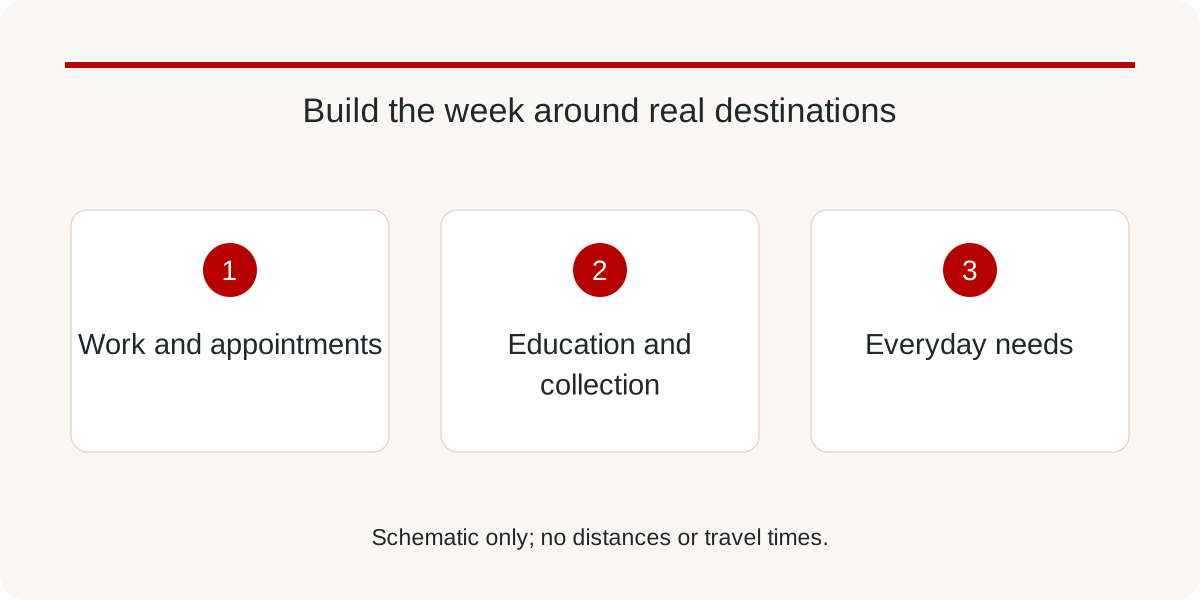
A location suits you when the specific home supports the journeys and access you actually need. Use local evidence to test the household's week before committing.
Begin with destinations you use, not a district ranking
A useful Abu Dhabi shortlist starts with the places your household needs to reach. Write down the actual workplace entrance, a confirmed education destination, regular appointments and the activities that matter enough to influence a home purchase. Add who makes each journey, on which days and by which realistic means of transport. This produces a more revealing starting point than a list of fashionable islands. A location that suits a person working from home may create awkward daily arrangements for a household with two separate work destinations and a child whose school finishes before either adult can collect them.
Separate essential requirements from preferences while everyone can still discuss them calmly. Step-free access, a workable school arrangement or a fixed employment destination may eliminate an otherwise attractive home. A favourite restaurant or occasional concert usually deserves a different weight. Do not hide an unresolved essential requirement inside an average score that allows several pleasant extras to compensate for it. First decide whether the property can support the necessary routine; then compare the advantages of the homes that remain. The objective is a household decision with understandable reasons, rather than a universal claim about the best residential area in Abu Dhabi.
Locate the building and the entrance before planning the journey
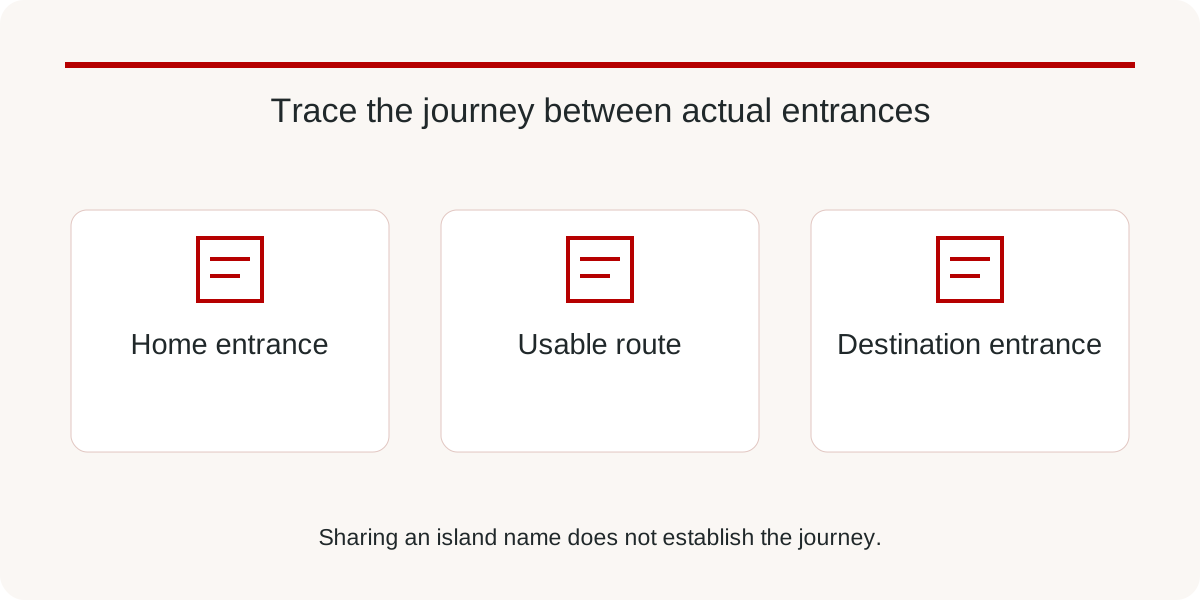
Use Abu Dhabi carefully as a location label. The emirate, the city, an island and a named development describe different scales, and none substitutes for the entrance of the home you are considering. Save the building or plot reference and ask which vehicle and pedestrian entrances residents actually use. A map pin at a sales office, visitor attraction or development centre can lead to a very different assessment from the occupied building. Check that the address in the property documents matches the property being shown before using it as the origin for your household journeys.
An island name is useful context, but it does not settle the route between two particular points on that island. Inspect the connection from the home to the street, including any controlled gate, parking exit, pavement or crossing involved. Where a large development has several phases, distinguish entrances already available from those shown in a later plan. A proposed route can remain a useful future possibility without becoming part of today's move-in calculation. Keep one current address record for each candidate so that every family member, adviser and transport enquiry refers to the same starting point throughout the comparison.
Use university locations as precise destinations
The official visitor directions for NYU Abu Dhabi place its campus on Saadiyat Island and the Institute at the campus's East Plaza. Sorbonne University Abu Dhabi's campus address identifies Al Reem Island. These are useful named anchors when a household genuinely needs to reach those institutions. They are not interchangeable references to a university somewhere in the emirate. Establish the relevant campus entrance, the person's actual destination and any applicable visitor or student arrangements. A programme, workplace or event can use a particular part of a campus, so broad location awareness should be followed by the destination details that matter to that person.
For a purchase intended for letting, a campus nearby on a map is a reason to investigate a possible occupier profile, not evidence of rental demand. Do not assume students can or will rent the proposed home, that a university recommends the building, or that ownership provides access to campus facilities. Study comparable residential accommodation separately and verify the intended use. For personal occupation, put confirmed attendance and realistic travel arrangements ahead of a general association with education. If the family has not selected an institution, keep that uncertainty visible rather than building the entire property decision around an unconfirmed future place.
A school announcement is not an available school place
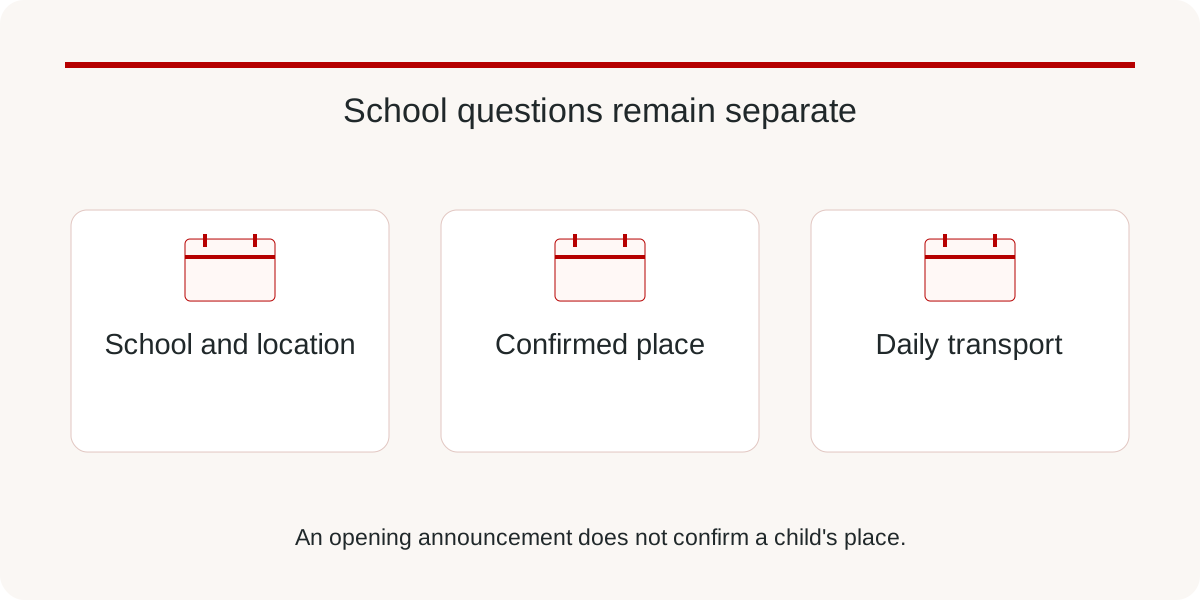
ADEK's announcement dated 6 October 2025 lists Yasmina American School in Khalifa City among newly opened licensed schools. Its value here is specific: it documents a named school and its location at that time. It does not answer whether a place is available for your child in the required year, what the current fees are or whether a school bus serves a particular building. Use the institution's current admissions process for those questions. Ask about the actual year group and intended start date, instead of relying on a general statement that a residential area has schools.
Consider collection arrangements and the rest of the household's day together. A route that works for an adult driving to work may not work for an earlier school finish, an after-school activity or a day when the usual driver is unavailable. Confirm transport arrangements with the relevant provider and compare the practical alternatives. If a school choice is still provisional, test the home against more than one realistic outcome without claiming that either place is secured. Keep education costs and transport commitments in the household budget, separate from the purchase price, so that the chosen home remains manageable after the move.
Decide how much Yas Island's visitor destinations matter to you
The official Yas Island visitor guide identifies attractions including Ferrari World Abu Dhabi, Yas Waterworld, Warner Bros. World and SeaWorld Abu Dhabi. Those destinations can matter to a household that expects to use them, but their presence should not dominate every property comparison on the island. Ask which activities you would genuinely repeat, who would join them and what admission or booking arrangements apply. Ownership of a nearby home does not by itself include an attraction ticket or membership. Compare the exact residence with the destination you intend to use, rather than importing an island-wide travel estimate into the listing.
Put occasional leisure alongside ordinary errands. A home may suit a weekend visit very well while its daily grocery trip, work journey or access arrangement needs more thought. Visit the particular residential setting at a time relevant to you; do not infer permanent quiet or constant disturbance from a destination's reputation. Event schedules and individual building positions differ. Record what you observed and when, then decide whether another visit would resolve a remaining question. This lets the leisure setting contribute honestly to the decision without becoming a promise about the sound, traffic, privacy or future value of every home in the area.
Read a public transport route from door to destination
Abu Dhabi Mobility's public transport guidance describes Standard Service journeys in Abu Dhabi, Al Ain and Al Dhafra and points passengers to Darbi for route and arrival information. Use the current official information to investigate a specific journey. Start with the correct origin and destination, the relevant day and the time you need to arrive. A route appearing in a search is the beginning of the comparison. Check the stop locations, any change of vehicle and the final approach to the destination before deciding that the proposed home can support a routine based on public transport.
Include the parts outside the vehicle. Reaching the stop, waiting, changing services and walking from the final stop can matter as much as the main journey. Assess the route against the abilities and preferences of the person who will make it, including whether they will carry shopping, accompany a child or need step-free access. Use an actual trial where practical and record the conditions. Do not borrow a journey time from another property or treat one successful trip as a permanent service guarantee. Keep a realistic alternative for the occasions when the preferred arrangement does not fit the household's schedule.
Check the exact Abu Dhabi Link journey, not only the zone name
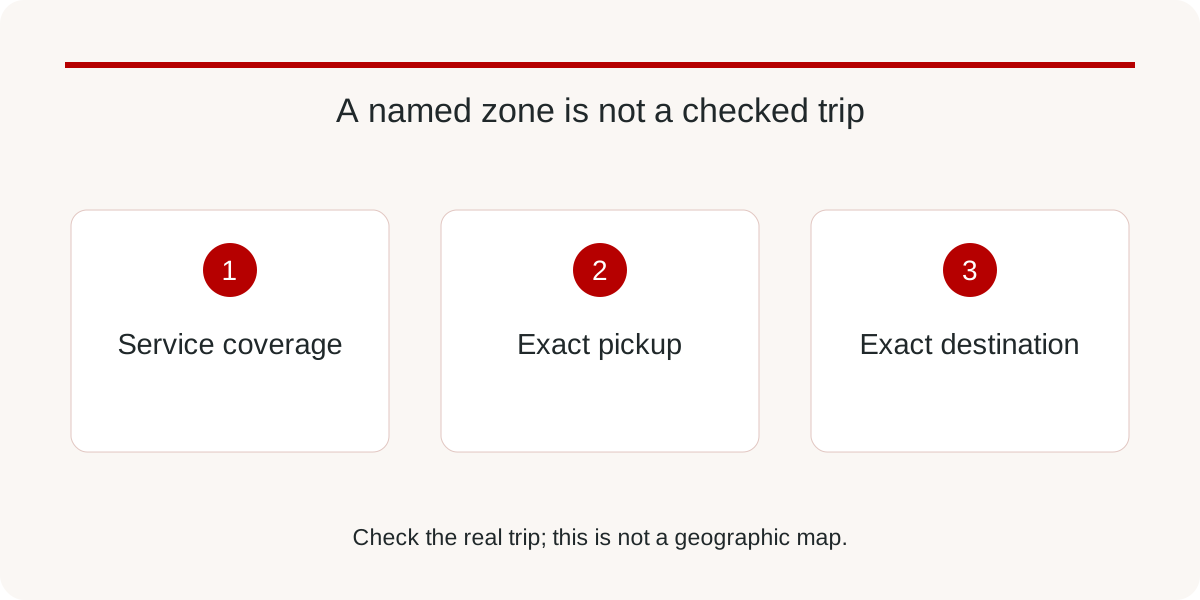
Abu Dhabi Mobility's Abu Dhabi Link page describes an app-requested bus service within its coverage areas and lists Yas Island, Saadiyat Island and Khalifa City among the service zones. That makes the service worth checking for a home under consideration in those locations. It does not confirm that every address or desired trip is covered. Verify both the proposed pickup and destination through the current service information and the applicable booking process. A development sharing a zone's name should not become a claim that the service collects residents at their building door or connects any two districts on demand.
Treat an on-demand option as part of a complete journey plan. Ask whether it solves the local connection you actually need, what remains before pickup and after drop-off, and which alternative you would use when it does not meet your schedule. Check current operating conditions rather than copying a fare or service window into a long-term housing comparison. A household considering fewer cars should test the arrangement with its real destinations before changing that commitment. The relevant outcome is a workable pattern of journeys, not a list of transport applications whose names make the property's description sound better connected.
Follow the access route through the building
During a viewing, start outside the building and follow the route you would normally take with everyday belongings. Check the resident entrance, parking position if included, lifts, corridors and the home itself. Confirm what belongs to the selected unit and what requires separate permission or payment. A vacant parking bay visible during a visit is not evidence that it is allocated to the property. A shared entrance or lift may also operate differently from a sales-office route. Ask the building manager about the practical arrangement and check the relevant property documents for the rights being offered.
Consider the household's less convenient moments as well as an easy viewing. Imagine arriving with groceries, accompanying an older relative, receiving furniture or leaving with a child at a busy time. Identify which part of the route needs a measured check, written clarification or a second visit. For accessibility needs, assess the actual dimensions and operation with an appropriate person rather than accepting a general accessible-building label. These observations complement a professional inspection; they do not replace one. Their purpose is to reveal whether the approach to the home supports the way you will use it after the initial excitement of the viewing.
Repeat a visit when the unresolved question needs it
One visit records one set of conditions. If noise, arrival arrangements, sunlight at a particular time or a work journey could change your decision, arrange a proportionate second check. Note the date, time, weather where relevant and the position from which you observed the issue. This makes the comparison more useful than remembering that a home felt quiet or that access seemed easy. Ask permission before photographing private areas or other people, and keep the working notes focused on the property. A practical visit should gather the missing evidence without intruding on residents or interrupting building operations.
Distinguish observation from explanation. Hearing construction during a visit establishes what you heard then; it does not establish the project's completion date or the conditions after it ends. A clear road on a weekend does not resolve a weekday arrival question. Seek the appropriate official or operator information for a planned change, while keeping your own observations accurately limited. If another visit is impossible, identify the uncertainty and ask whether the purchase still works with it unresolved. This is more informative than adding a confident description to a property file merely because the evidence would take time to obtain.
Match the surrounding services to your occupation date
Separate services you can use now from facilities under construction and future announcements. A brochure can describe the intended finished community while the home offered today belongs to an earlier phase. Ask which entrances, shops, shared spaces and service arrangements are available for the proposed occupation date. Where a future facility is decisive, identify the dated source and what it actually says about delivery. Do not turn an artist's view, a project launch or a nearby land parcel into evidence of an operating service. The home should be assessed against the period in which you expect to live there.
Compare a ready option and an off-plan option with their different timing made explicit. Include the household arrangements needed before occupation, such as an existing lease, temporary accommodation or a later school transition. Use confirmed costs and labelled assumptions; this article supplies no market prices or predicted delays. Ask whether the property would still suit the household if an optional future facility were unavailable at move-in. A location's longer-term plans may remain attractive, but the decision should explain how current needs will be met without assuming that every planned element arrives together or automatically improves the home's financial performance.
Let two households reach different answers from the same facts
Consider a hypothetical comparison, not actual listings. One household regularly attends a confirmed destination on Saadiyat and values a manageable route there. Another has a confirmed school arrangement in Khalifa City and a different workplace. Both enjoy occasional visits to Yas attractions. The first step is to test suitable homes against each household's repeated journeys and essential access needs. There is no reason for the occasional leisure preference to produce the same answer for both. Nor does the example establish which district is cheaper, quieter or better connected for an unspecified property; those questions need their own current evidence.
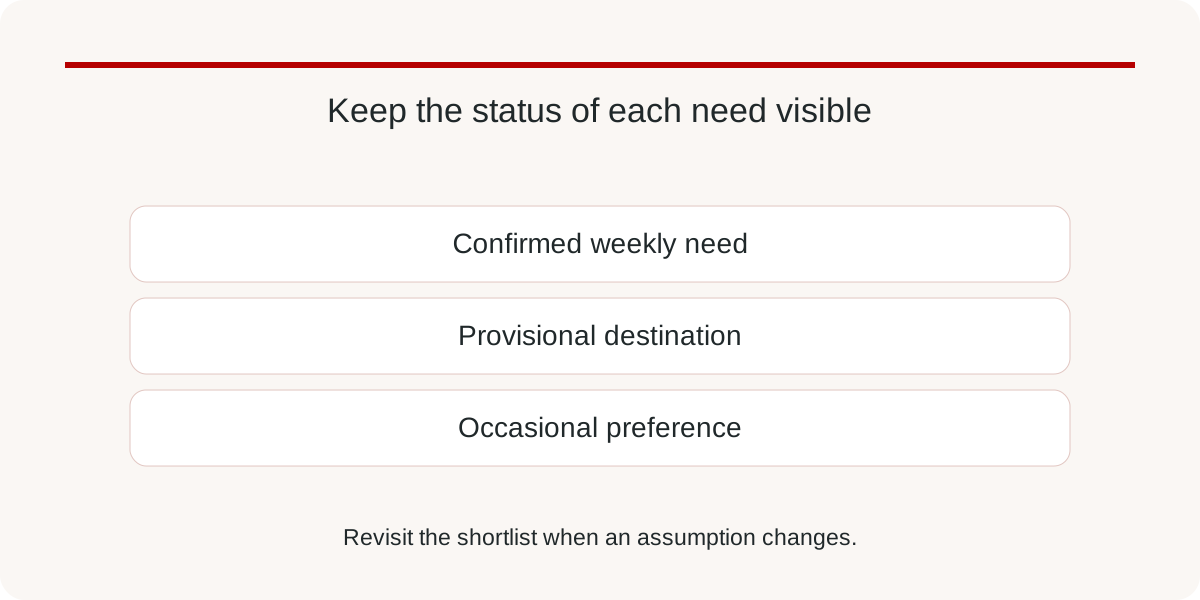
Now change one assumption: the first household's campus attendance is only a possibility, while its existing workplace remains fixed. Revisit the shortlist instead of retaining the original ranking out of habit. The example shows why the status of a requirement matters as much as its importance. Mark each destination confirmed, provisional or occasional, and explain any decision that relies on a provisional one. A simple comparison can then reveal what must be resolved before purchase. Avoid false precision from a numerical score when the decisive inputs are still uncertain, and keep the reasoning understandable to everyone who will live with the decision.
Bring a household brief to the property discussion
Prepare a concise brief with the candidate property's exact identity, intended occupation date, essential destinations, available transport arrangements and the issue that remains unresolved. Include relevant observations and current source links, without sharing unnecessary personal documents or details about children. State the requirement in practical terms, such as a suitable school journey or an entrance that meets a particular access need. PGI can use that brief to compare suitable properties and identify which questions belong with a school, transport operator, building manager or other relevant professional. The discussion becomes more precise when the household's actual routine is visible.
Keep this location decision separate from the purchase and ownership checks that follow. The Abu Dhabi project-verification article addresses the relationship between an off-plan offer, records and payment instructions; the rental-operations article addresses preparing and running a tenancy. Neither is replaced by a successful journey test or a pleasant viewing. Equally, a well-documented transaction does not make an unsuitable daily routine convenient. Use the guides together to understand the home, the transaction and the work of ownership. A sound shortlist contains properties that suit a clear purpose, with the remaining questions recorded before that purpose becomes a financial commitment.
Questions to settle before choosing the home
- Which weekly destinations are confirmed, provisional or occasional?
- Does the exact entrance and journey work for the person using it?
- Which services are operating by the intended occupation date?
- What unresolved requirement could change the decision?
Continue the Abu Dhabi property review
- Abu Dhabi location and purchase guide
- Match the project record to the offered unit
- Prepare and run a residential tenancy