
Use a clear document trail to establish what an off-plan offer describes, which evidence applies to the unit and which questions need answers before payment.
Start with the question the documents must answer
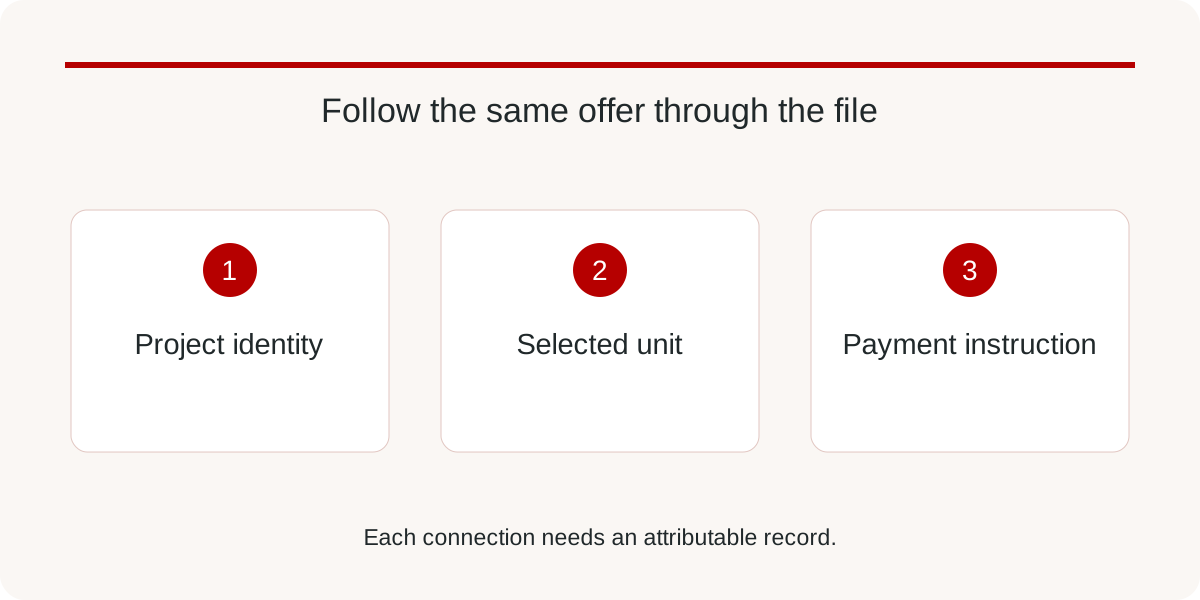
A brochure, a reservation form and a construction update can all look convincing while describing different parts of the same development. Before a payment for an Abu Dhabi off-plan home, establish whether the records refer to the particular unit and transaction you are considering. The useful question is not simply whether a project exists. It is whether you can follow a clear chain from the official project identity to the offered phase, building, unit, contract and payment instruction, without filling a missing link with an assumption.
This investigation has a practical stopping point: a decision about what you can rely on, what needs clarification and what should wait. It is not a substitute for advice on the legal effect of a contract. It also does not require collecting every document ever issued for a development. Work with the current offer and the evidence relevant to it. A compact file with traceable answers is easier to review than a large folder of attractive material whose dates, versions and relationship to the unit remain unclear.
Create one identity record before searching
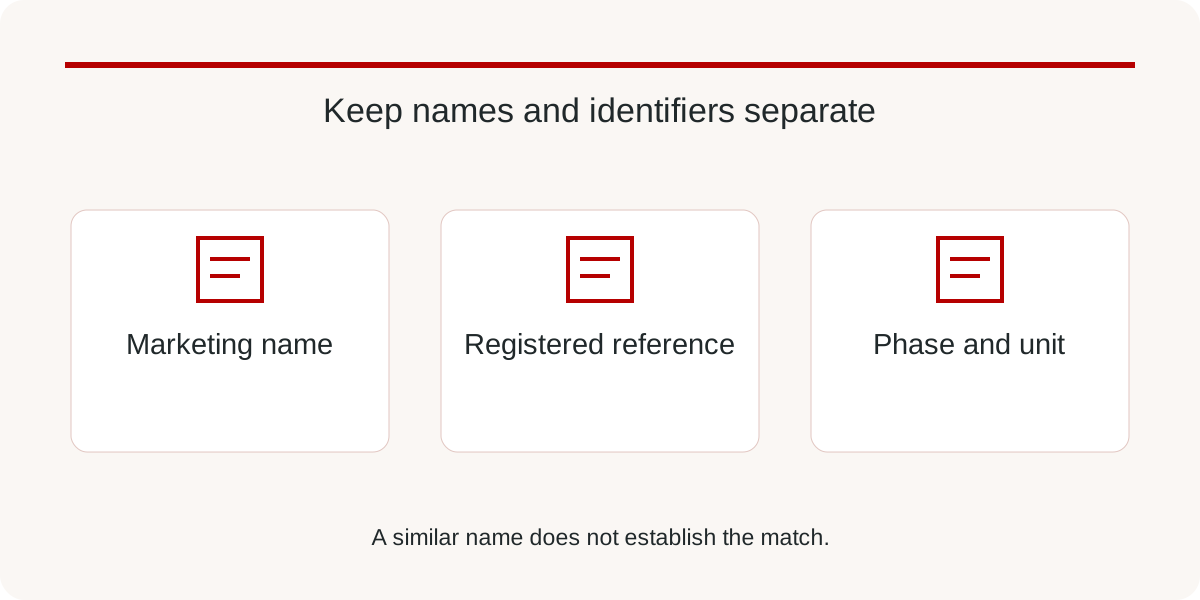
Identify the jurisdiction before using a project directory. ADGM's real estate framework covers Al Maryah and Al Reem islands; check its services for a property there. Use the ADREC directory discussed below for projects within its remit. Ask the seller for the project name used in registration, any available project reference, the developer's legal name, the phase, the building or plot and the unit reference. Keep the marketing name as a separate field rather than silently replacing the registered name with it. Record the location at a useful level: municipality, district and community where available. The ADREC directory provides project-name or number searching and location filters. Use that official starting point to distinguish similarly named offers; do not assume that the first familiar result is the correct record.
Save the source of each identifier. The reservation form may supply the unit reference, while a project document supplies the registered name. If these documents use different labels, note who can explain the relationship and request a written answer. Transliteration between Arabic and English can create harmless spelling differences, but it can also conceal a mistaken match if you rely on the name alone. Preserve both versions until the connection is established. Do not alter a number, remove a phase suffix or shorten a legal entity name to make two records appear consistent.
Separate the organisation from the project and the salesperson
A recognisable developer brand does not answer every question about the parties to a particular transaction. Write down which entity is named as developer, which party is offering the unit and which person is communicating with you. Request the documentation appropriate to their stated roles. The purpose is to identify who can give an authoritative answer about the offer and who will be bound by the relevant documents. A polished email signature or a shared brand name should not become your only evidence that those roles line up.
Where an intermediary is involved, ask how their authority relates to the exact offer. Keep commercial explanations separate from documentary confirmation. An intermediary may help obtain information, but a helpful conversation does not resolve an inconsistency in the seller's name or the contracting entity. This distinction is especially useful when several representatives send versions of the same offer. Choose one current document set for evaluation and record which version supersedes the others. That avoids comparing an earlier payment schedule with a later contract and mistakenly treating the difference as a new concession.
Use DARI for the questions ADREC directs there
For a project within ADREC's remit, ADREC's official FAQs direct users to DARI for registered project escrow details and completion rates. Reach the platform through the official reference and establish the project match before relying on the information. Retain the relevant record, its date and the identifiers visible with it. If a result is unavailable or does not expose enough detail to match the offer, record that limitation and request clarification. An incomplete search does not prove that a project is unregistered; equally, a screenshot with no identifiable project cannot complete your check.
Treat the service result as evidence for its stated subject. A progress record answers a construction-progress question, while an account record helps investigate the destination of project payments. Neither automatically answers whether the specific unit is still available, whether your contract contains acceptable conditions or whether you qualify for a particular ownership arrangement. Keep these questions separate in the file. This prevents a positive result in one area from spreading into a general statement that everything about the purchase has been verified when several transaction-specific matters remain open.
Check the phase rather than borrowing another building's progress
Large developments may be presented under one community identity while offers refer to different phases or buildings. Ask which project record supports the unit's construction update and whether the update covers that particular stage. Compare the phase label in the offer, the document describing progress and the specification attached to the contract. If the labels differ, ask for the mapping between them. Do not use photographs of an occupied building to infer the condition of a separate building merely because both appear in the same marketing presentation.
The facilities need their own scope check. List any amenity that is important enough to affect your decision and identify whether it is part of the unit, the building, the phase or the wider community. Then record the stated delivery or operating status. A shared facility is not a private feature of the home, and a future community plan is not evidence of access on the day you receive the keys. If the purchase only works with a particular facility available, the timing and access conditions belong among the questions to resolve before commitment.
Read a progress date separately from a delivery promise
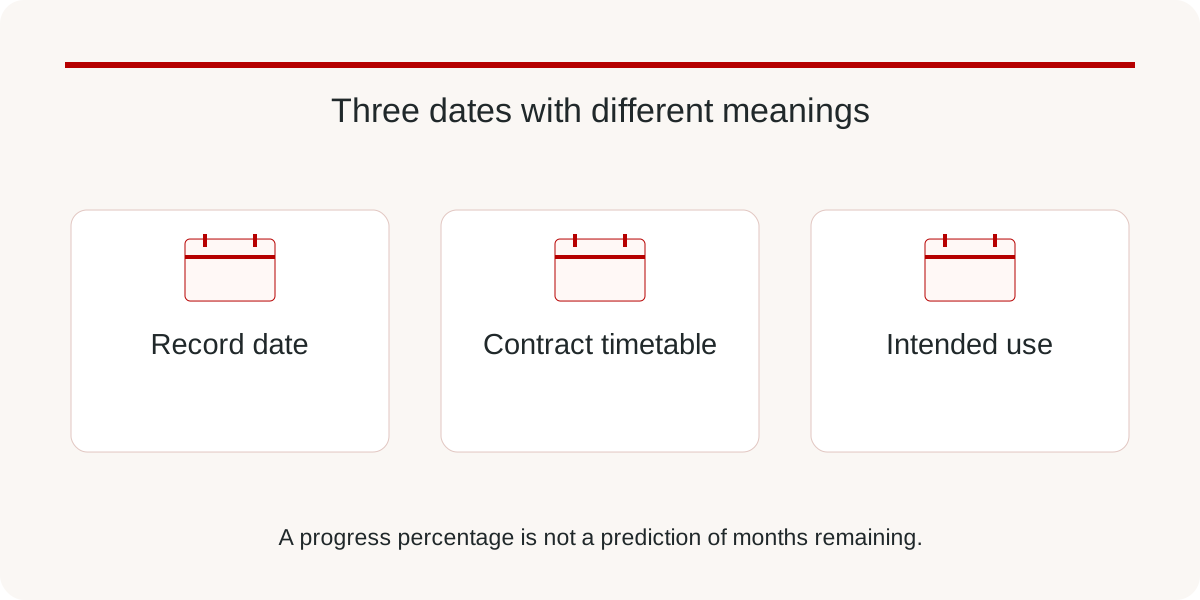
When reviewing a construction percentage, keep the date beside the number. Ask when the underlying assessment was made, rather than relying solely on the date the salesperson forwarded it. A recent message can contain an older record. Compare the recorded progress with the contractual timetable, but do not turn the percentage into a mathematical prediction of the remaining months. Different stages of work have different dependencies, and a percentage alone does not describe the remaining tasks that matter to occupation. Ask what the current evidence actually establishes.
Separate the expected construction milestone, the contractual delivery provisions and your own intended move-in or rental date. These are related but distinct. Review the contract's wording with the appropriate adviser where an interpretation is needed, especially if your financial plan depends on timing. Keep room in that plan for the consequences of a later start, without inventing a likely delay or assuming there will be one. The purpose is to understand exposure: which payments, temporary housing needs or other commitments continue if the home cannot be used when you hoped.
Connect the proposed payment to the current documents
Before transferring funds, compare the written payment instruction with the current contract or reservation terms and the relevant official project information. Check the beneficiary name, account details, payment purpose, amount, currency and due date. Ask which document authorises the particular payment and how it relates to the purchase price. Avoid treating a familiar logo as confirmation of these fields. If the instruction arrives in a different channel or names a different entity, obtain a written explanation through a contact route you have independently established for the transaction.
Do not silently edit account information to make it resemble a record, and do not assume that a difference is merely a spelling issue. Preserve the original instruction and describe the mismatch precisely. An administrative fee, reservation amount and project instalment may raise different questions; do not assume their treatment is identical without checking the applicable documents. This article does not establish that any particular beneficiary or requested payment is valid. A meaningful check ends with transaction-specific confirmation, not with recognition of a bank name or confidence that the person sending the message sounds knowledgeable.
Work through a mismatch without guessing the answer
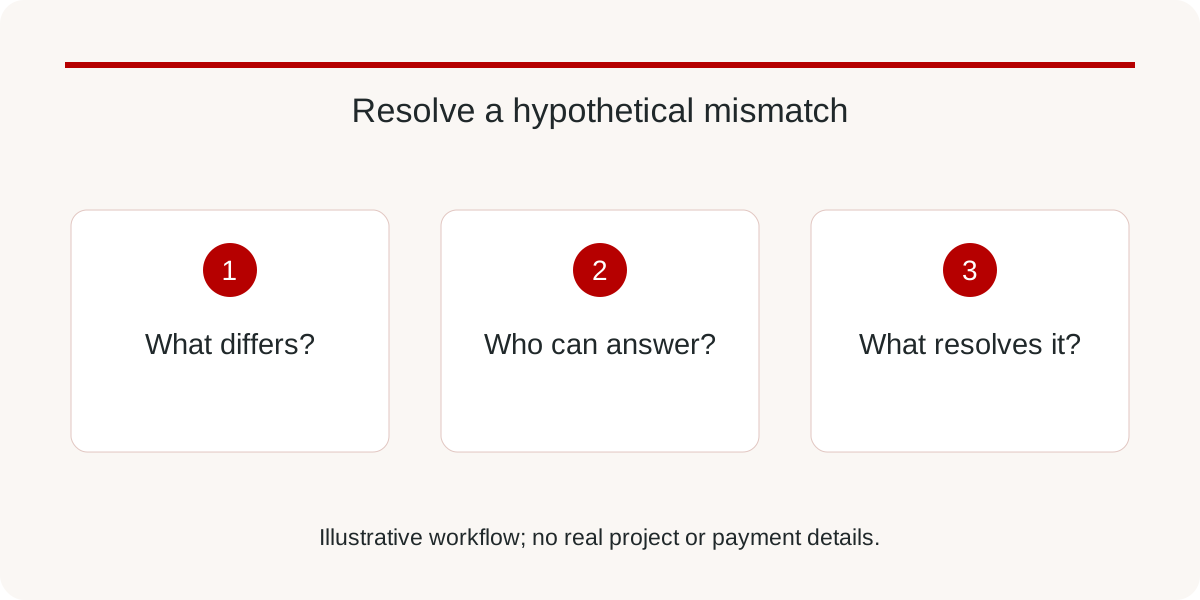
Consider a hypothetical file, not an actual project or offer. The brochure calls a development Project A, the reservation form identifies Phase B and Unit C, and a progress image shows Building D. The payment email uses only the broad Project A name. Nothing in this example proves that the offer is wrong; the problem is that the links between the records are missing. Create four separate questions: how the registered project relates to the marketing name, where the unit sits, which works the update covers and which instruction applies to the payment.
Assign each question to a document or a person who can provide an attributable answer. A revised form linking the phase and unit might resolve the identity issue, while the progress question may require a different record. The payment question still needs its own confirmation. Do not close all four questions because one corrected document arrives. Update the file with what changed and what remains unresolved. This approach makes it possible to continue useful investigation without accepting a weak explanation merely because you have already spent time on the property.
Keep the floor plan and commercial terms in the same version
Once the identity chain is clear, verify that the specification you are comparing belongs to the selected unit. Check the unit reference, layout, stated area basis, parking and the inclusions shown in the current documents. An attractive plan from a different stack or earlier release can distort both usability and price comparison. If there are several area measures, retain their labels and ask which one the quotation uses. Do not convert an outdoor or shared area into usable internal space, or infer a room that the plan does not show.
Bring the current quotation, payment schedule and relevant contract attachments together under a single version date. List changes in a short revision note: a different unit, revised instalment date, changed inclusion or new condition. Ask for the revised document when a change is material to the decision rather than relying on a conversational summary. This is particularly useful when comparing two offers that appear similarly priced. Their cash requirements and specifications may differ, and a comparison is only useful if both sides refer to the terms you could actually accept today.
Decide which evidence needs an independent check
Some questions can be answered by a consistent document set; others need an inspection, an official clarification or professional interpretation. Classify the unresolved issue before deciding whom to ask. A mismatch in the location record is different from a question about a contractual remedy, and both differ from uncertainty about the practical layout. Use the appropriate specialist for the actual problem. Paying for a broad review without identifying the issue can leave the decisive question unanswered, while asking a salesperson to interpret every obligation can place too much weight on the wrong source.
For a remote purchase, agree how originals, copies and translations will be reviewed and who may act on your behalf. Confirm the relevant authority and document requirements for your own transaction rather than assuming a procedure from another emirate applies. Share only the information needed with the appropriate recipient. Keep personal identification and bank details out of general enquiry messages when they are unnecessary. The working comparison file can usually describe the issue with property references and redacted examples before a professional determines which supporting documents they require.
Record outcomes instead of collecting reassuring messages
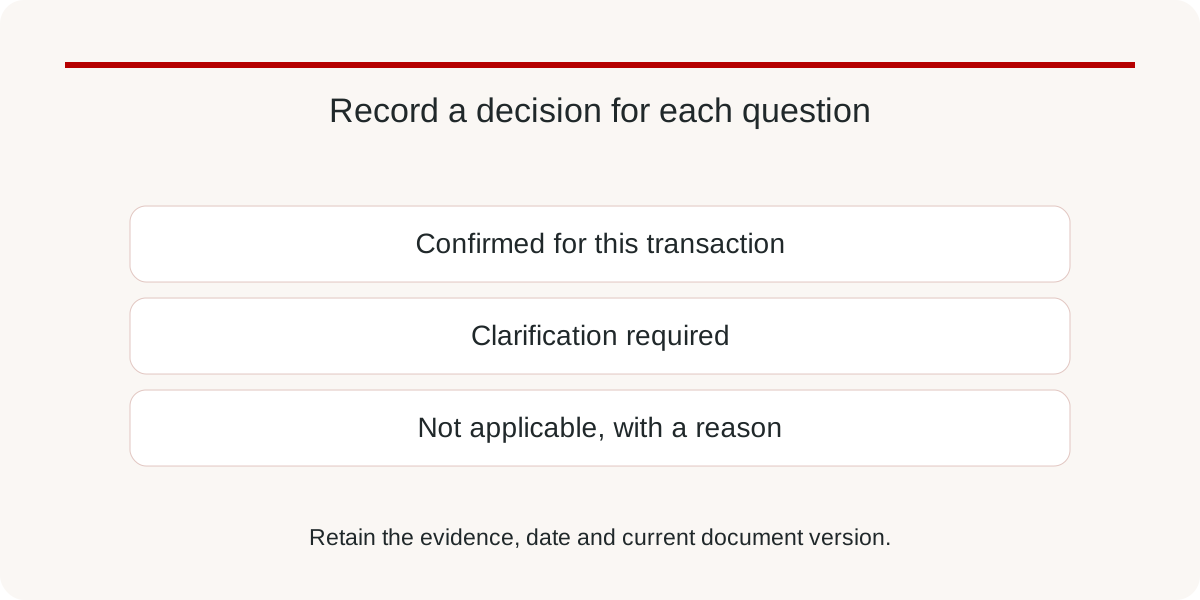
Use clear outcomes for each question: confirmed for this transaction, clarification still required, or not applicable with a reason. Put the evidence reference and review date beside the outcome. A statement such as “the representative explained it” is difficult to revisit; a note that identifies the revised document and the field it resolved is much more useful. Preserve earlier versions in a separate history so you can reconstruct why the decision changed. Do not let an old, favourable answer remain current after the unit or payment terms have changed.
Set a specific next action for every open point and identify what would be enough to resolve it. If the question is which phase a unit belongs to, more general community photographs are unlikely to help. If it concerns the contractual effect of a clause, another marketing brochure will not answer it. This keeps the enquiry proportionate and reduces repeated exchanges. You are not trying to prove a property perfect in every respect; you are trying to make the important uncertainties visible and decide whether they can be resolved before taking the relevant step.
Prepare the next purchase discussion with a concise file
Bring PGI a short summary containing the exact property reference, intended use, current offer version and unresolved questions. Attach the relevant non-sensitive extracts where they help explain a mismatch. Ask the adviser to distinguish information they can verify from information that must come from the authority, developer, bank or legal professional involved. That creates a practical discussion about the available alternatives and the work still required. It also helps avoid restarting the same enquiry with each new representative or comparing a replacement unit against evidence collected for the first one.
Before the payment decision, revisit the file as a whole. The project match, phase, unit, contract and payment instruction should tell a consistent story, with any outstanding matter explicitly addressed. Where an issue remains material, obtain the appropriate clarification before proceeding rather than allowing a deadline in a sales message to answer it for you. Keep the final documents and confirmation together for the next stage of the purchase. The value of this process is a traceable decision about a specific Abu Dhabi home, not a general promise that every off-plan purchase follows the same path.
The file to bring to the next discussion
- Exact project, phase, building and unit references
- Current offer and contract version with dated amendments
- Payment instruction and the document explaining its purpose
- Open questions, responsible parties and the evidence needed