Count shared dependencies, not just addresses
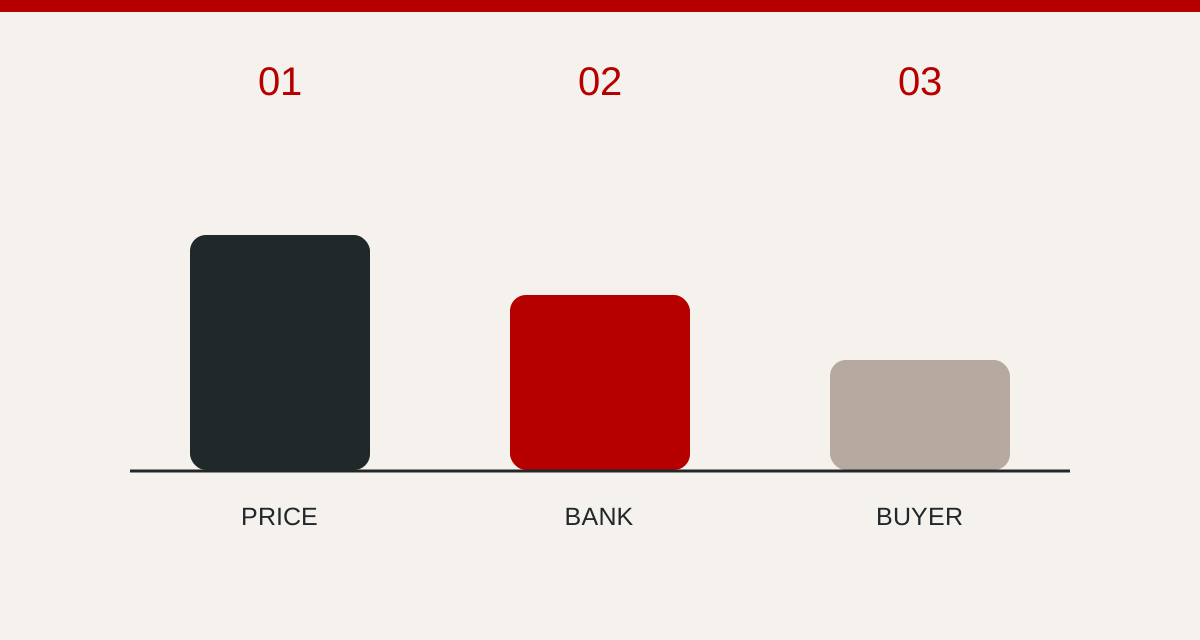
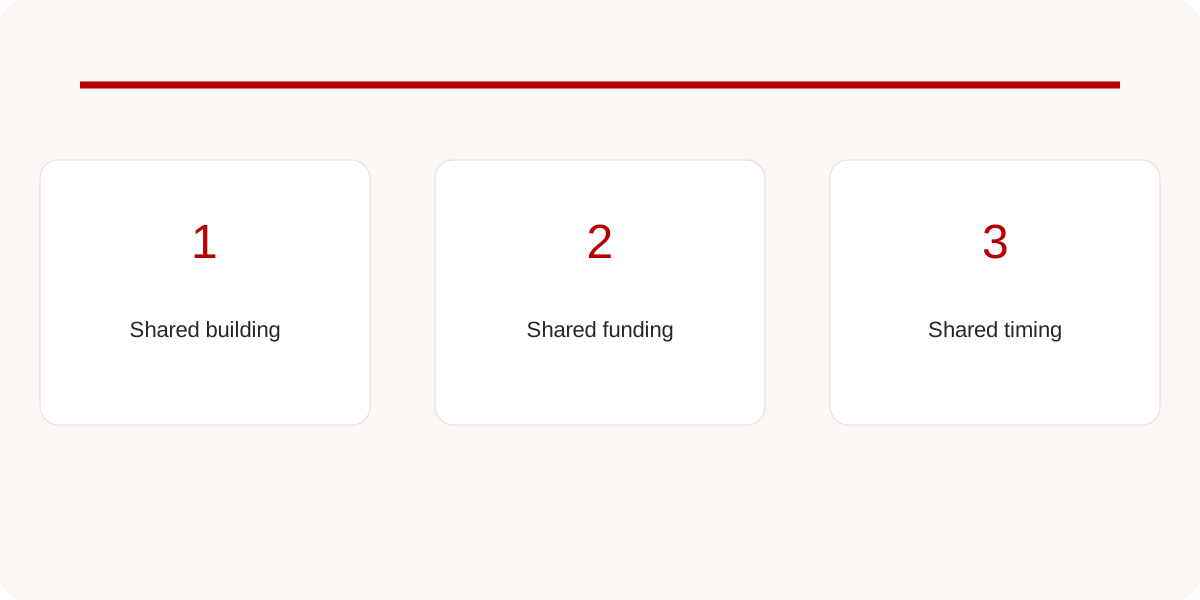
Owning several apartments does not automatically give an owner several independent sources of risk. Units in the same building may share management arrangements, common facilities and exposure to the same repair programme. Different buildings can still rely on the same developer, tenant market or completion period. Make a simple inventory of these connections before adding another property. The useful question is what the proposed purchase changes in the overall position, rather than whether it increases the number of title deeds in the file.
For each property, record the factors that could affect its use, income or sale alongside the factors shared with other holdings. Keep confirmed facts separate from assumptions about who will rent it or when it could be sold. Investor.gov, the US SEC's investor-education website, describes diversification as spreading investments to reduce risk and links investment choices to time horizon and risk tolerance. That general principle is useful here; it does not supply a Dubai allocation formula or make a group of properties immune to losses.
Put all commitments on one calendar
A purchase can appear affordable when considered by itself and still place pressure on the owner when its payments coincide with other commitments. Combine instalments, financing payments, known ownership costs and planned works in one calendar. Add the dates when income is actually expected to become available, without treating an uncollected rent or an unsold property as cash already held. This view reveals whether several separate investment plans depend on the same incoming payment to keep them moving.
Give each funding source one allocation at a time. If savings are reserved for a future completion payment, show the amount remaining for other purposes after that commitment. When a proposed purchase changes the balance, update the whole calendar instead of attaching an isolated spreadsheet that leaves the earlier assumptions untouched. Ask what would happen if two commitments came together sooner than expected or if one source arrived later. The aim is to identify a practical funding response, not merely to produce a positive total at the end of the holding period.
Separate willingness to take risk from ability to carry it
An owner may feel comfortable with price movements yet have little room to meet an unexpected cash requirement. Another may have ample liquidity but find the uncertainty and management work unacceptable. Record both positions. Consider the money that can remain invested, the obligations that cannot be postponed and the amount of attention available for the portfolio. A decision should not rely solely on enthusiasm for a location or on how calmly somebody says they would react to a temporary fall in value.
Include the wider household circumstances without mixing them into a promotional return calculation. A planned move, education costs or a change in employment may alter when money is needed. If household earnings and rental demand both depend on a similar sector, note that connection as an exposure to investigate rather than assuming the two income sources are unrelated. The relevant question is whether several parts of the plan could become difficult together. Do not invent a probability for that event when the evidence does not support one.
Use scenarios that combine more than one difficulty
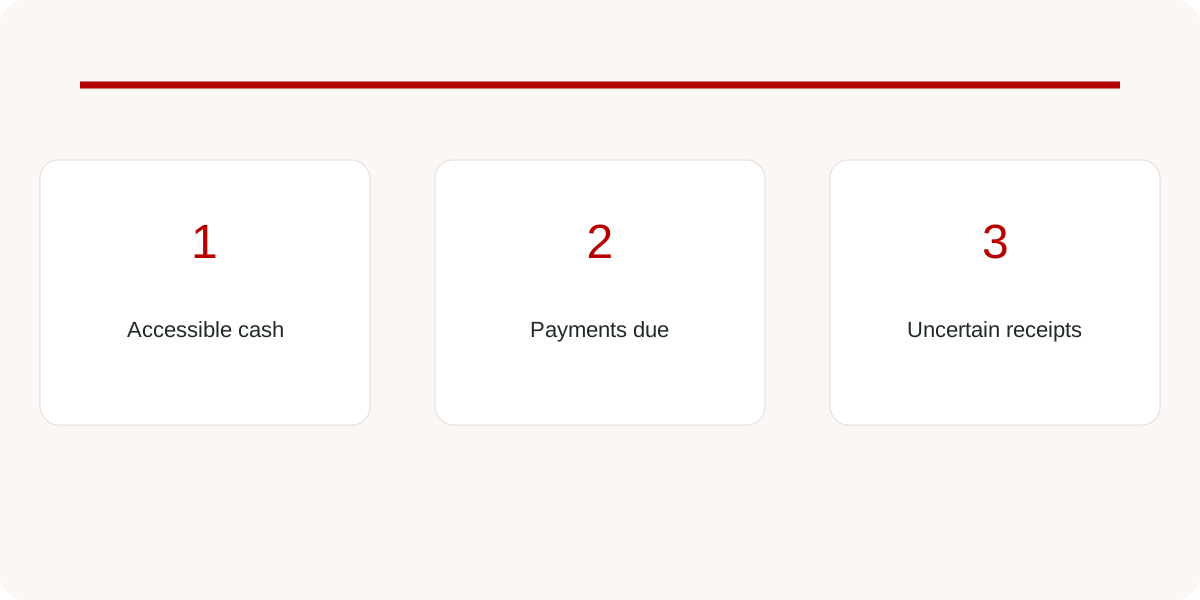
Testing each property separately can miss a problem that appears only across the portfolio. Consider a hypothetical period in which one unit needs work while another is between occupants and an existing finance payment remains due. State clearly that this is a scenario, not a prediction of vacancies or defects. Identify which cash is accessible, which spending is optional and which decisions require another party's agreement. Then check that the same reserve has not been used to solve every property's problem in full.
Write a response beside each pressure point. It might involve postponing a discretionary acquisition, reducing optional work or gathering a current financing quotation before deciding. Avoid assuming that a sale will close on demand or that a lender will approve a change because the spreadsheet needs it. A useful scenario ends with decisions that can be investigated and assigned, together with remaining uncertainty. It should help you recognise a fragile plan before adding another commitment, not create an impression that every possible difficulty has been eliminated.
Treat the exit route as a process, not a cash balance
Estimated property value is not the same as money available for the next payment. A sale requires a suitable transaction to be agreed and the applicable steps completed. Dubai Land Department publishes a property-sale registration service and its requirements, but the administrative service description does not establish how long a particular owner will need to find a buyer. Keep the intended sale price, the evidence behind it, the expected costs and the unresolved transaction requirements visible in the exit file.
Review the consequences if the proposed sale happens later or at a different price. Check what commitments remain affordable without those proceeds and which new purchases depend on them. Where a property is occupied or financed, gather the relevant documents and professional input for that specific position instead of borrowing assumptions from a simpler transaction. This is also why a quoted price increase across an area cannot be treated as a completed gain in your own account. The current market evidence and your property's transaction position must be examined separately.
Set decision limits you can actually monitor
Choose review questions before the next offer arrives. Which shared exposure would the new purchase increase? Would it tie more cash to the same period? Does it add work that the current management arrangement cannot absorb? Record the answers and the evidence still required. There is no universal property count or allocation percentage in this guide: the purpose of the record is to make the owner's constraints explicit and allow a qualified adviser to assess the actual circumstances where appropriate.
Use the readings below to examine three different parts of the portfolio: the financing-gap guide for unexpected cash requirements, the market-evidence guide for the limits of headline data and the exit plan for the steps behind a sale. Keep their assumptions consistent with the combined calendar. At the next review, compare the real position with the recorded one, including changes outside the property portfolio. A disciplined decision can be to proceed, seek another candidate or defer a purchase. Increasing the number of properties is not itself evidence that the portfolio has become stronger.
- Map shared exposures.
- Combine payment calendars.
- Test simultaneous pressures.
- Separate a planned sale from cash held.
Sources and reference
- SEC Investor.gov — Asset Allocation and Diversification — Checked 13 October 2026
- Dubai Land Department — Property Sale Registration — Checked 13 October 2026