Read the ownership offer at project level
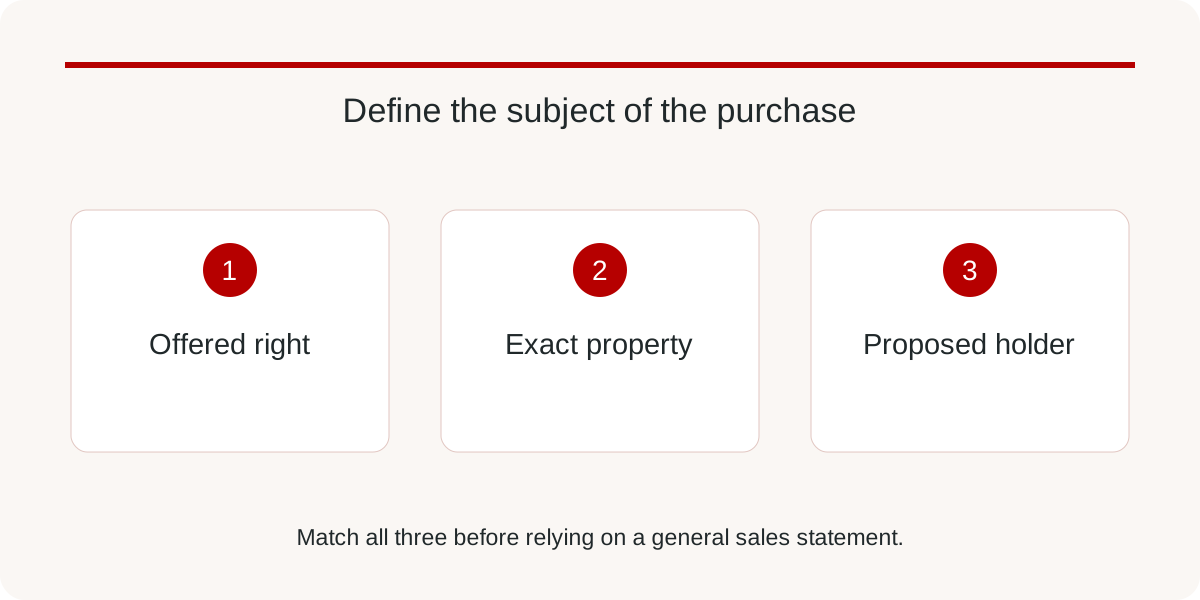
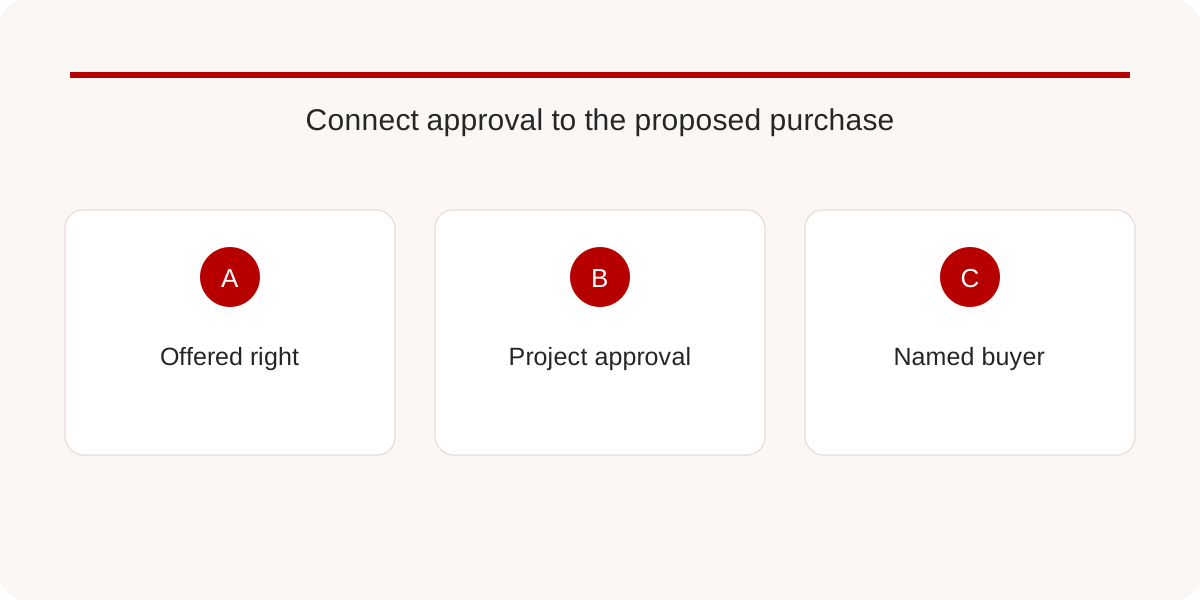
Sharjah's Executive Council announcement of November 2022 described ownership by all nationalities in real estate development areas and projects. The official H1 2026 market report continued to distinguish projects approved under the relevant resolution. Read these statements within that scope. They are a reason to investigate the specific property's eligibility, not evidence that every property advertised anywhere in the emirate offers the same right to every buyer. Before paying a reservation amount, ask which approval applies to the development and what the proposed transaction will register.
Keep the answer connected to the buyer named in the transaction, the precise unit or plot and the contract version you will sign. Ask the responsible authority or an appropriately qualified adviser to resolve any uncertainty about the offered right and your circumstances. Terms such as ownership and usufruct should not be treated as interchangeable descriptions in a comparison spreadsheet. If a translation or sales summary is unclear, obtain an explanation tied to the underlying document. The goal is a decision about a defined asset and right, rather than confidence based on a broad market headline.
Decide whether the setting works for its actual occupants
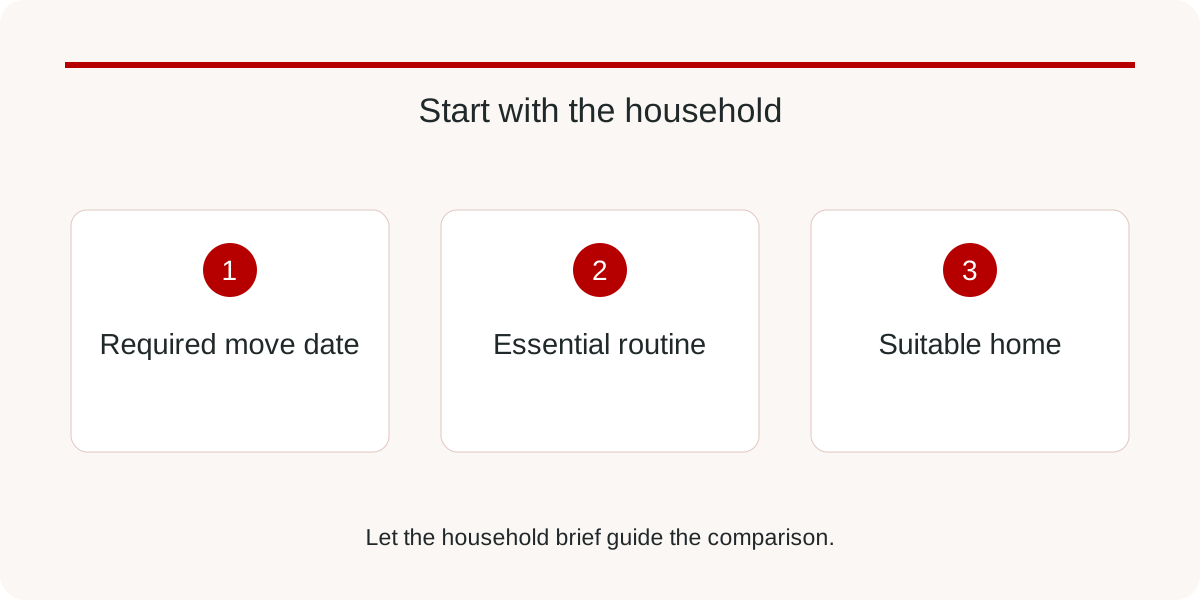
Imagine an ordinary week in the proposed home. Where will household members work or study, how will shopping and appointments fit around those journeys, and who will use the vehicle or parking space? Visit the entrance serving the unit and test the trips that matter to you. An advertisement's reference to access towards Dubai is not a dependable travel time for your workday. If the purchase relies on regular travel between emirates, assess that routine directly instead of allowing a price difference to stand in for a transport decision.
Inside the property, examine what the floor plan allows. Check room dimensions against the furniture and storage you need, the path between bedrooms and bathrooms, and whether the specified parking arrangement suits the household. Distinguish a private feature of the unit from a shared community facility. A pool shown in project imagery does not establish a private pool, and a rendering of a completed neighbourhood does not establish today's access to its facilities. Ask which amenities belong to this phase and when they are expected to be usable, retaining the source and date of the answer.
Compare a lived-in neighbourhood with a developing community
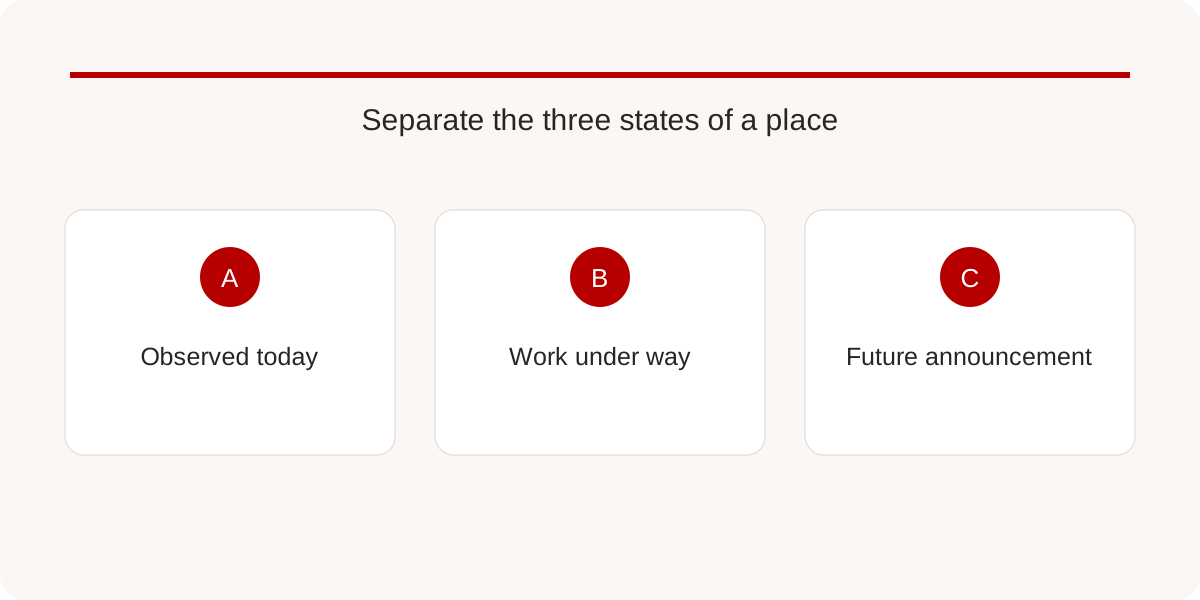
An existing home offers evidence you can observe: the route into the building, the condition of shared spaces, noise at different times and how maintenance requests are handled. Use a visit to investigate those points rather than relying on a polished lobby photograph. Speak with the responsible manager about the services included in the charges and the work currently planned. A completed building can still require repairs or changes before it meets your needs, so record those tasks and their estimated cost before comparing it with a newer alternative.
An off-plan home requires a different set of questions. Establish which phase contains the unit, what the contract includes, how payment dates relate to your available funds and what evidence supports the expected delivery timetable. Keep the unit's specification separate from the wider community's eventual plans. When a future school, shop or leisure facility is important to your choice, confirm its stated status and consider how the household would function before it becomes available. A planned community can fit a long-term intention without being equivalent to a neighbourhood already serving residents today.
Treat the advertised entry price as the start of the enquiry
A starting price belongs to an offer at a particular date and may refer to a different unit, layout or payment arrangement from the one you want. Obtain a written quotation for the selected property with the applicable terms. Compare the total purchase commitment and the timing of payments, not just the first instalment. For a resale, request the relevant costs and settlement requirements for that transaction. Do not transfer a developer's historical launch price to another phase or treat it as evidence that a particular home is still available.
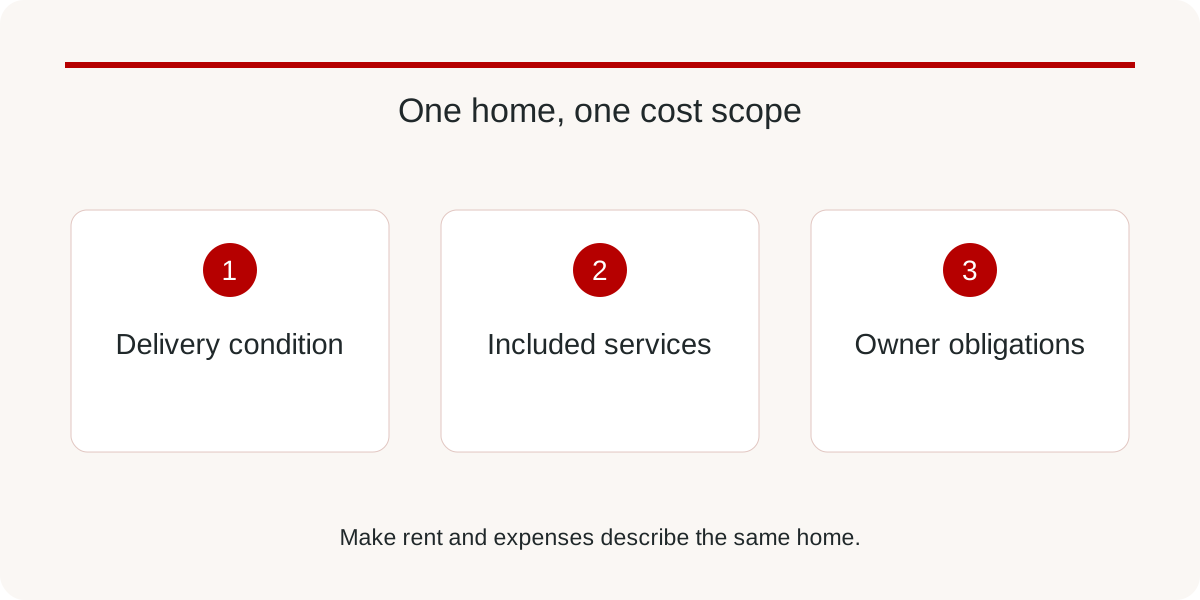
After the purchase costs, build a separate holding budget. Ask for the available information on service charges, maintenance, insurance, utility setup and management, identifying the owner's responsibilities under the applicable documents. Add preparation work that the home actually needs. If your intention is to let, set aside assumptions about empty periods and reletting costs for testing; do not hide them within an optimistic annual rent. A property that fits the purchase budget may still put pressure on household finances or investment cash flow if its operating costs have been left out.
Use Sharjah market reporting to frame questions, not predict your return
The official first-half 2026 report groups several forms of sales activity, including sale, usufruct sale and initial sales contracts. That distinction matters when a headline is used to describe the market. An activity total is not the same measure as the price movement of comparable completed apartments, and none of these measures establishes a future rental return for your unit. Preserve the period, geography and transaction definition whenever you quote a figure, and use the report to identify what needs closer investigation rather than treating it as an investment outcome.
For a rental case, work back from homes that could genuinely compete for the intended occupier. A family considering a particular layout and daily routine may not view every property in the same price band as an alternative. Record why each comparison belongs in the group and whether the evidence is an asking rent, an agreed rent or simply an agent's estimate. Keep unavailable information visible. If the case depends on a rent that has not been supported, test a more cautious scenario and identify the evidence needed before you commit.
Keep the eventual sale in view while making the purchase
Before buying, ask how a future purchaser would understand the property you are choosing. Its recorded right, condition, layout, management records and contractual position will form part of that assessment. Request clarification of any transfer conditions that apply to the proposed transaction rather than assuming a standard route or an unrestricted exit. No general guide can confirm the resale permissions for an individual contract. When the investment depends on selling at a particular time, examine the consequences of a later sale as well as the preferred timetable.
Bring the exact offer and the unresolved questions to PGI so the discussion can compare usable alternatives. Keep three matters visible through the process: the right and property identity, the occupant's practical needs, and the complete financial commitment. A promising choice is one where those matters support one another without requiring an unverified promise to make the numbers work. Retain dated documents and written answers as the offer develops. They provide a clearer basis for a purchase discussion than a repeated claim that an entire emirate is suitable for every budget or investment objective.
Official sources
- Sharjah24: Executive Council announcement, November 2022 — Checked 13 October 2026
- Sharjah24: registration department report for H1 2026 — Checked 13 October 2026