Quick answer: Before paying for a Dubai off-plan property from abroad, check the broker's DLD record and the exact project. Match the buyer, unit, amount and purpose across your documents. Independently confirm the payment recipient with the developer and verify the relevant project escrow arrangements. Resolve discrepancies before transferring, retain the receipt, and follow up on provisional sale registration.
A payment request arrives while you are overseas. The apartment looks right, the payment plan fits your budget, and the agent has answered your questions. What still needs checking before you send the money?
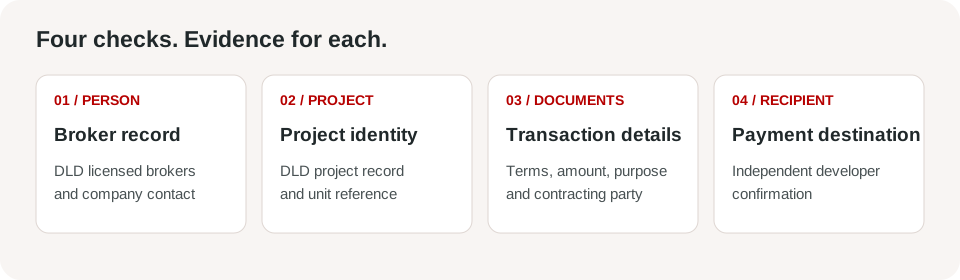
The practical task is to connect four things: the person handling the sale, the registered project, the documents for your purchase, and the recipient of this particular payment. Each needs its own evidence. This checklist focuses on a first sale from a developer in Dubai; an assignment or resale requires a transaction-specific review.
1. Establish who is handling the sale
Ask for the broker's full name, brokerage name and broker registration details. Use Dubai Land Department's Licensed Real Estate Brokers service, available through its website and Dubai REST, to check the official record. Compare the result with the person and company you are dealing with.
Then establish a separate contact with the developer's sales or customer-service team. Obtain the contact route independently, rather than relying exclusively on a number or link forwarded in the sales conversation. Ask that team to confirm the unit reference and the documents or instructions it has issued.
A broker licence check supports an identity check. It does not authenticate a particular email, payment link or bank account. Keep that distinction when a message contains the correct logo or a familiar employee name.
2. Identify the project behind the marketing name
A community, sales phase and registered project may appear under different labels. Ask for the project number and registered name, together with a written explanation connecting them to the offered unit.
DLD's Project Status Enquiry supports searches by project name or number and directs users to Mashrooi in Dubai REST. Its interface includes developer, inspection and escrow information. Retrieve the record for the actual project; opening the search page alone verifies nothing about your purchase.
Check that the developer and project identifiers correspond to the transaction documents. If a phase name differs, obtain the connection in writing before treating the records as a match. Save the result and its date with your purchase file. A project record is one part of the assessment; it does not replace reading the terms for your unit.
3. Reconcile the documents before opening the transfer screen
Read the reservation terms, payment request and sale and purchase agreement when available. Ask which document governs the payment being requested now, and what follows it. Do not assume every developer issues or signs the documents in an identical order.
Use a comparison sheet to record the details below. An unresolved difference is a question to answer before payment, even if the rest of the paperwork appears consistent.
| Detail | What to compare | Question when it differs |
|---|---|---|
| Buyer | Name and ownership details on the current documents | Which version will be corrected before payment? |
| Property | Registered project reference, phase, building and unit number | Is this the same unit I selected? |
| Contracting party | Developer's legal entity on the applicable document | How does it relate to the marketing name? |
| Amount | Current payment request against the agreed schedule | What explains an extra charge or changed amount? |
| Currency and deadline | Requested currency, due date and transfer instructions | Which terms apply to this payment? |
| Purpose | Reservation, purchase instalment or separately itemised fee | What does the money secure or discharge? |
| Recipient | Beneficiary, bank details or payment-link issuer | Who independently confirms this recipient and its role? |
Read the applicable reservation conditions as carefully as the amount. Ask whether the unit is allocated, how long any reservation lasts, and what the written terms say about cancellation or refunds. An expression of interest should not be treated as a confirmed unit allocation merely because money has been requested.
For the wider assessment of construction, contract provisions and ownership costs, use our Dubai off-plan due diligence guide. Those questions remain separate from checking where today's payment will go.
4. Confirm the recipient for this payment
DLD's escrow guidance describes a project escrow account as receiving purchasers' payments for units sold off-plan and project-financier funds. The guidance applies to Dubai developers selling off-plan and receiving those payments. Check the arrangements for the exact project rather than accepting the word “escrow” in a message as confirmation.
Ask the developer to confirm the beneficiary, bank, account details, amount, payment reference and purpose through the independently established contact route. Compare that confirmation with the project information and your payment request. If you receive a payment link, ask the developer to confirm that specific link and the transaction it represents before entering payment details.
Keep different payment purposes separate. If a request combines a purchase instalment with a registration charge, reservation amount or other fee, ask for an itemised explanation and the applicable payment route for each. Unclear classification is a reason to obtain clarification; it is not a reason to guess which account is appropriate.
Never treat a request to send the purchase price to an individual's account as resolved by an agent's verbal assurance. Escalate an unexplained recipient to the developer and, where needed, DLD or an independent adviser. Escrow verification does not establish that the investment will meet your return or completion expectations.
If bank details change at the last moment
Suppose you have checked a payment request, then receive a new message with a different beneficiary and the explanation that it is “faster.” This is an illustrative situation, not a Property Gulf client case.
Pause the transfer. Contact the developer through the route you established earlier and ask it to reconcile the new instructions with the previous request. Obtain corrected written instructions and recheck the purpose, amount and unit reference. A reply in the same message thread is not an independent confirmation of the change.
5. Send one clear verification request
Collect the open points into a single message so the response can be saved with the transaction file. You can adapt this wording:
Before I make this payment, please confirm the registered project name and number, developer legal entity, unit reference, buyer name, amount, currency and payment purpose. Please confirm the beneficiary and bank details, or the issuer of the payment link, and identify the applicable project escrow arrangements. Please also provide the terms governing this payment, explain any differences between the documents, and confirm the next steps for signing and provisional sale registration. I will verify the payment instructions separately with the developer before transferring.
Keep the reply attached to the relevant document version. If the unit, amount or recipient changes later, reopen the affected checks rather than relying on the earlier confirmation.
6. Follow the payment through to its records
Save the bank or card confirmation and request a receipt that identifies the buyer, unit, amount and purpose. Reconcile it with the developer's payment record and the remaining schedule. Ask the responsible team to resolve a missing or incorrectly allocated payment in writing.
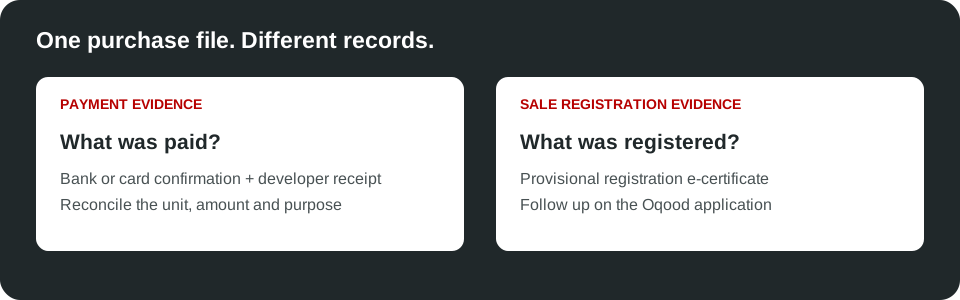
Payment evidence and sale registration serve different purposes. DLD's initial sale registration service allows developers to register off-plan sales in the provisional register through Oqood. It lists a sale and purchase contract and a valid passport for non-resident individuals among the required documents, and issues a provisional registration e-certificate. Its terms require registration within 90 days of signing the contract.
Confirm who handles the application, what information they need from you and how you will receive the output. Follow up against the contract signing date. A reservation confirmation or payment receipt should not be filed as if it were that registration certificate.
Questions buyers ask at this stage
Is a well-known listing portal enough to verify the deal?
Use the listing to discover the offer. Complete the broker, project, document and payment-recipient checks separately. The offer page cannot answer every question about the instructions you subsequently receive.
Must I receive an Oqood certificate before any booking payment?
Do not assume a universal sequence. Clarify the current reservation terms and the developer's signing process before paying. The DLD registration service concerns the sale and purchase contract and its provisional registration; it is a separate follow-up from the receipt for an earlier payment.
What if I cannot complete a check from abroad?
Ask the responsible party to identify what is missing and the appropriate official or professional route to resolve it. For the broader coordination of documents, meetings and representation, read Buying Dubai Property from Overseas. Do not let a short payment deadline substitute for an unanswered verification question.
Discuss your Dubai purchase with Property Gulf
Tell us the project or unit you are considering and the stage you have reached. Our team can discuss the offer and the questions to raise with the developer before you commit. Keep passports, banking information and payment credentials out of an initial public enquiry.
Contact Property Gulf or message the company on WhatsApp.
Dubai-specific guidance. Official service pages checked on 9 October 2026. Transaction documents and individual circumstances determine the advice you need.